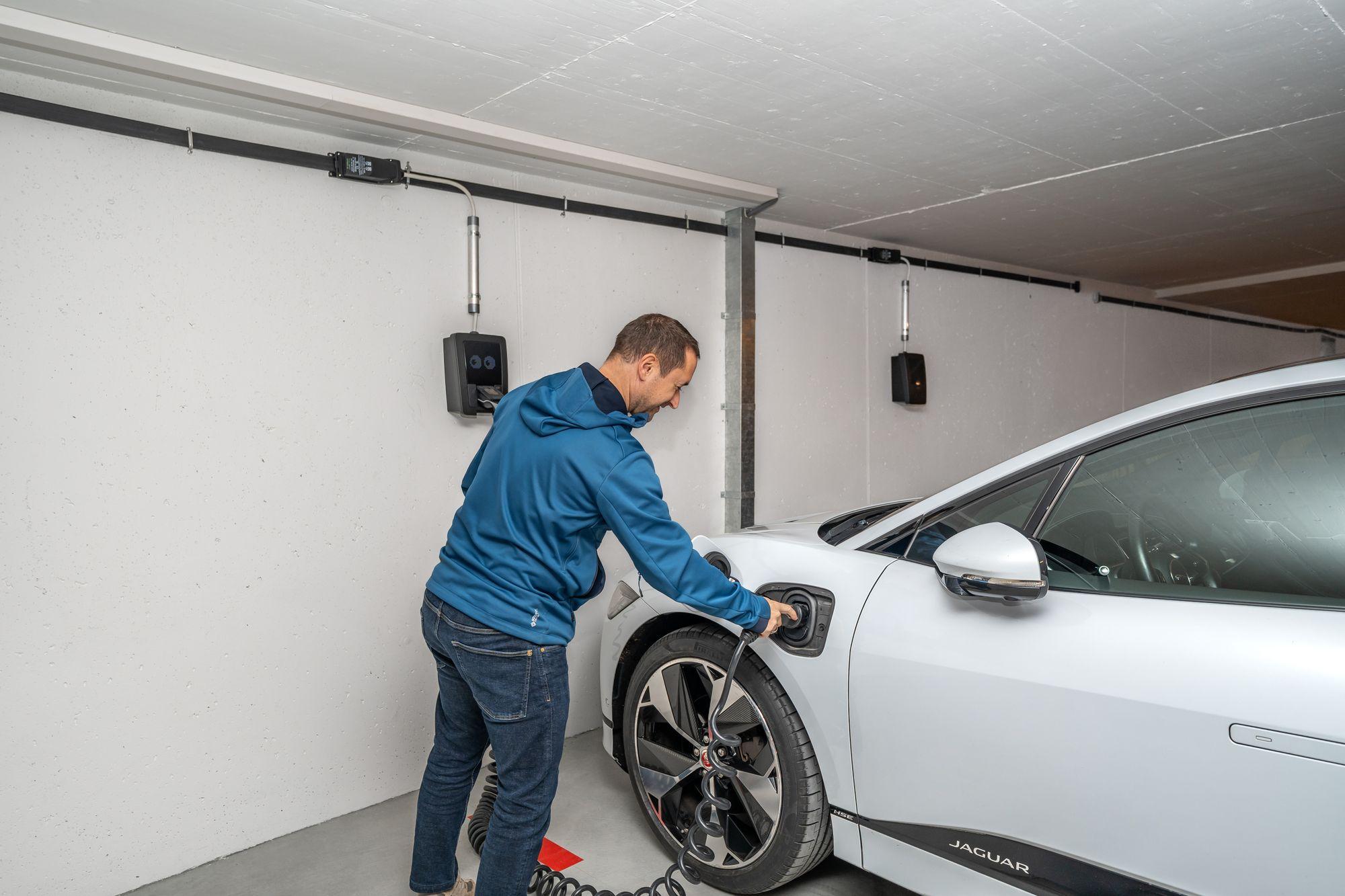
Why EV charging requests are now a routine board item
Many Toronto and GTA condo boards now receive EV charging applications regularly, and the questions are almost always the same. Does the board have to say yes? How long does it have to decide? Who pays for the wiring and the electricity? What if the building's electrical service is close to capacity?
Since 2018, Ontario Regulation 48/01 under the Condominium Act, 1998 has set a dedicated process for EV charging systems in condominiums, in place of the usual approval rules for common-element changes. It limits the reasons a board can refuse and sets fixed timelines for the response and the agreement that follows.
This guide explains the rules from the board's side. It is general information, not legal advice; involve your corporation's lawyer and a qualified electrical professional in any specific application.
The legal framework in brief
Sections 24.1 to 24.7 of Ontario Regulation 48/01 deal with EV charging systems. Three features shape everything else:
- They are deemed part of every declaration. Under section 24.1, no board may approve amending or repealing them, so a corporation cannot opt out.
- They replace the usual change rules for EV chargers. An owner's installation under the regulation is exempt from section 98 of the Act (owner changes to the common elements), and a corporation installation under section 24.3 is exempt from section 97 (the corporation's own changes).
- "EV charging system" is defined broadly. It means electric vehicle supply equipment as defined in the Electrical Safety Code, plus any other related equipment needed to supply power to an electric vehicle. In practice that includes the charger, wiring, conduit and any panel or metering work.
An owner's charger usually sits at their parking unit or exclusive-use parking space, with wiring running across the common elements. The owner exemption applies where all or any part of the system is on the property, so it covers that common-element work too.
Step 1: The owner's written application
To use the process, the owner must deliver an application to the corporation. Under section 24.5, it must:
- be in writing and signed by the owner;
- identify the owner and the owner's address for service for the application; and
- include drawings, specifications or information about the proposed installation, including its location, that on reasonable grounds are relevant to any professional report or opinion the corporation could obtain.
It can be delivered by mail or courier to the corporation's or the management provider's address for service, to an address the board designates by resolution, by email only if the board has approved that method by resolution, or in a manner both sides agree to in writing. A board resolution naming one trackable channel avoids arguments about when the clock started.
The corporation must also, as soon as reasonably possible, provide any information, permission or authorization the owner requests in writing that is reasonably required to prepare the drawings and specifications. That often means electrical room access and existing drawings for the owner's electrician. The Condo Authority of Ontario's EV charging guide includes template application and response forms that many boards use.
Step 2: The board's response within 60 days
Once the corporation receives an application that meets the requirements above, the board must respond to the owner in writing within 60 days, or within another period the owner and corporation agree to in writing. If the board thinks the application is incomplete, it must say so, and explain why, as soon as reasonably possible.
The response must take one of three forms:
- Rejection under the narrow grounds in section 24.5(8), with a copy of the supporting professional report.
- Acceptance with an alternative manner or location required by the board under section 24.5(12).
- Acceptance as proposed, stating that the board does not reject the application and does not require an alternative.
If the board misses the deadline, it is deemed not to have rejected the application and not to have required an alternative. Date-stamp every application on receipt and diarize the 60-day mark.
When a board may reject an application
A board may reject an application only if a report or opinion from a person whose profession lends credibility to it, obtained by the corporation, sets out its reasons and clearly states that the installation:
- will be contrary to a statute, regulation or municipal by-law, including the Electrical Safety Code, but not including anything in the corporation's own declaration, by-laws or rules;
- will adversely affect the structural integrity of the property or the corporation's assets; or
- will pose a serious risk to the health and safety of an individual, or of damage to the property or assets.
The rejection must include a copy of that report, less any part exempt from examination under section 55(4) of the Act. A board preference, or a rule against chargers, does not meet this test.
Requiring an alternative manner or location
If the board does not reject the application, it may require a different manner or location, such as another conduit route or panel, but only if the alternative would not cause the owner unreasonable additional costs, and only if it is necessary so that either:
- owners, on an objective basis, would not regard the installation as materially reducing or eliminating their use or enjoyment of their units, the common elements or assets; or
- the installation will not contravene the declaration, by-laws, rules or an agreement the corporation is party to.
On the second ground, a board cannot rely on a declaration provision that prohibits EV charging generally, or a by-law, rule or agreement that prohibits or unreasonably restricts it generally. The response must explain why the alternative is needed and include drawings and specifications showing how it is to be done. Knowing how the declaration, by-laws and rules fit together helps here.
Electrical capacity, metering and the building's systems
Electrical capacity worries boards most. Limited spare capacity is not, on its own, one of the listed grounds for rejection. The board's tools are the professional report (where an installation would breach the Electrical Safety Code or create a serious safety risk) and the alternative manner provisions (for example, requiring a load-managed connection or a particular panel, provided the owner is not put to unreasonable cost). This is a technical and legal judgment, and it should rest on advice from a qualified electrical engineer and the corporation's lawyer.
- Know your baseline. A building-wide capacity assessment of the garage and main service lets the board answer applications consistently, and a shared design for routes, panels and load management helps when several owners apply.
- Decide how electricity will be measured. Where the garage runs on the corporation's common meter, the corporation pays for the power. The agreement should say how the owner's consumption will be measured and recovered, for example through a dedicated meter or a charger that records usage, and on what billing schedule.
- Use licensed trades. Electrical work in Ontario must be done by a Licensed Electrical Contractor, who notifies the Electrical Safety Authority (ESA). Require proof of the ESA inspection.
Step 3: The installation agreement within 90 days
Once the board accepts the application, requires an alternative, or is deemed to have accepted it, the corporation and the owner must take all reasonable steps to enter into a written agreement within 90 days, or another period they agree to in writing. Under section 24.6(3), its terms must be reasonable and necessary to facilitate the installation, use and operation of the system, and must address:
- the manner of the installation;
- how the cost of the installation is allocated between the corporation and the owner;
- each party's duties and responsibilities for the system, including the cost of use, operation, repair after damage, maintenance and insurance, and the cost of preparing and registering the agreement;
- who owns the system, or each part of it; and
- what happens when use of the system ends or the agreement is terminated.
The corporation must register the agreement against title to the owner's unit as soon as reasonably possible, and the agreement does not take effect until it is registered. Once registered, it binds the unit and future owners. If the owner fails to comply with it, the corporation may add the resulting costs, charges, interest and expenses to the common expenses payable for the unit.
It plays a role similar to a section 98 agreement, but it is a separate instrument with its own required terms. Boards with a disciplined unit alteration approval process can reuse the same habits: templates, clear drawings and one file per installation.
Who pays
Unless the agreement says otherwise, the owner is responsible for all costs of an installation the owner or the owner's contractor carries out, and for all reasonable costs if the corporation or its contractor carries it out. During the application stage, each party bears its own costs for the steps it takes, unless the agreement provides otherwise. So the corporation's own engineering review stays its cost unless the agreement shifts it.
Insurance
The agreement must allocate responsibility for insuring the system. A common approach is for the owner to insure equipment they own and carry liability coverage, with an indemnity for the corporation. Confirm with the corporation's broker how the installation affects its own policy.
When the corporation installs chargers itself
Section 24.3 lets the corporation install shared or building-wide charging without the usual section 97 process.
| No owner vote route (s. 24.3(4)) | Possible owner vote route (s. 24.3(5)) | |
|---|---|---|
| When it applies | Estimated cost to the corporation is not more than 10 per cent of the annual budgeted common expenses, and the board reasonably believes owners would not see a material reduction in their use or enjoyment | Any corporation installation that does not meet both conditions |
| Notice to owners | Describes the installation, the estimated cost and how it will be paid, and the board's opinion on use and enjoyment | Same core content, plus notice of the owners' right to requisition a meeting under section 46 within 60 days and copies of the relevant provisions |
| When work can proceed | At least 60 days after the notice is sent | If no meeting is requisitioned within 60 days, quorum is not present at the first attempt to hold the meeting, or owners at the meeting do not vote against it |
Either way, the board must first assess the installation cost, which excludes later use, operation, repair, maintenance and insurance costs. All of the corporation's costs for a system it installs under section 24.3 are common expenses, so the notice should be clear about how usage will be recovered from those who charge.
Disputes: mediation and arbitration, not the CAT
Section 24.7 requires the corporation and owners to submit disagreements about sections 24.3 to 24.6 to mediation and arbitration, and section 132 of the Act applies. Every installation agreement is deemed to contain a mediation and arbitration clause.
The Condominium Authority Tribunal is generally not the forum: Ontario Regulation 179/17 specifically excludes vehicle, parking, storage and nuisance disputes that also involve an EV charger installation agreement under section 24.6(3), just as it excludes those involving a section 98 agreement. Our guide to choosing between the CAT, mediation and arbitration explains how section 132 works in practice.
The deadline is firm: an application is deemed abandoned if neither side submits the disagreement to mediation or arbitration within six months after a rejection, or after the agreement period expires without a signed agreement.
Records and status certificates
Ontario Regulation 48/01 lists records relating to EV installations among those a corporation must keep, so file the application, response, reports, agreement and proof of registration together; owners may ask for them through a records request. Status certificates must include any registered EV agreement binding the unit, whether the parties have complied with it, and any proposed corporation installation under section 24.3(5).
A practical checklist for boards
- Pass a resolution naming the address and electronic method for EV applications, and publish it to owners.
- Adopt lawyer-reviewed templates, starting from the Condo Authority of Ontario's, and commission a capacity assessment.
- Log each application and diarize the 60-day and 90-day deadlines.
- Reject only on a professional report that meets section 24.5(8), and attach it.
- Settle metering, insurance, ownership and end-of-use terms, register the agreement and keep one file per installation.
How professional management helps
Brilliant Property Management has supported Ontario condo boards since 2002. For EV charging, a manager logs applications, tracks deadlines, coordinates engineering reviews and contractor access, prepares draft responses and agreements for the board and its lawyer, and keeps the records status certificates rely on. If your board wants a steadier process, learn more about our condo property management in Toronto, review our full services, or invite us to respond through our request for proposal page.
Frequently asked questions
Can an Ontario condo board say no to an owner's EV charger?
Only on limited grounds. Under section 24.5 of Ontario Regulation 48/01, the board may reject an owner's application only if a report or opinion from a qualified professional, obtained by the corporation, clearly states that the installation would contravene a law (including the Electrical Safety Code), would adversely affect the structural integrity of the property, or would pose a serious risk to health and safety or of damage to property. A copy of the report must go to the owner.
How long does a condo board have to respond to an EV charger application?
The board must respond in writing within 60 days of receiving an application that meets the regulation's requirements, unless the owner and corporation agree in writing to a different period. If the board does not respond in time, it is deemed not to have rejected the application and not to have required an alternative manner or location.
Who pays for an EV charger in an Ontario condo?
For an owner-initiated installation, the owner is responsible for the installation costs unless the agreement with the corporation says otherwise. The agreement must also allocate the costs of use, operation, repair, maintenance and insurance. The corporation's costs for a system it installs under section 24.3 are common expenses.
Does the owner need a written agreement with the condo corporation?
Yes. Once the application is accepted (including with an alternative, or by a missed deadline), the parties must take all reasonable steps to sign a written agreement within 90 days, unless they agree otherwise. The corporation registers the agreement on title to the owner's unit, and it does not take effect until it is registered.
Can EV charger disputes go to the Condominium Authority Tribunal?
Generally not. Disagreements about the EV charging provisions of Ontario Regulation 48/01 and about EV charger installation agreements go to mediation and arbitration under section 132 of the Condominium Act, 1998. If neither side starts mediation or arbitration within six months of a rejection or a failed agreement period, the application is deemed abandoned.
This article is general information about EV charging systems under the Condominium Act, 1998 and Ontario Regulation 48/01, current as of October 2026, and is not legal advice. Legislation, regulations and the Tribunal's jurisdiction change from time to time, and each corporation's declaration and circumstances differ. Consult your condominium lawyer and a qualified electrical professional before deciding an application.