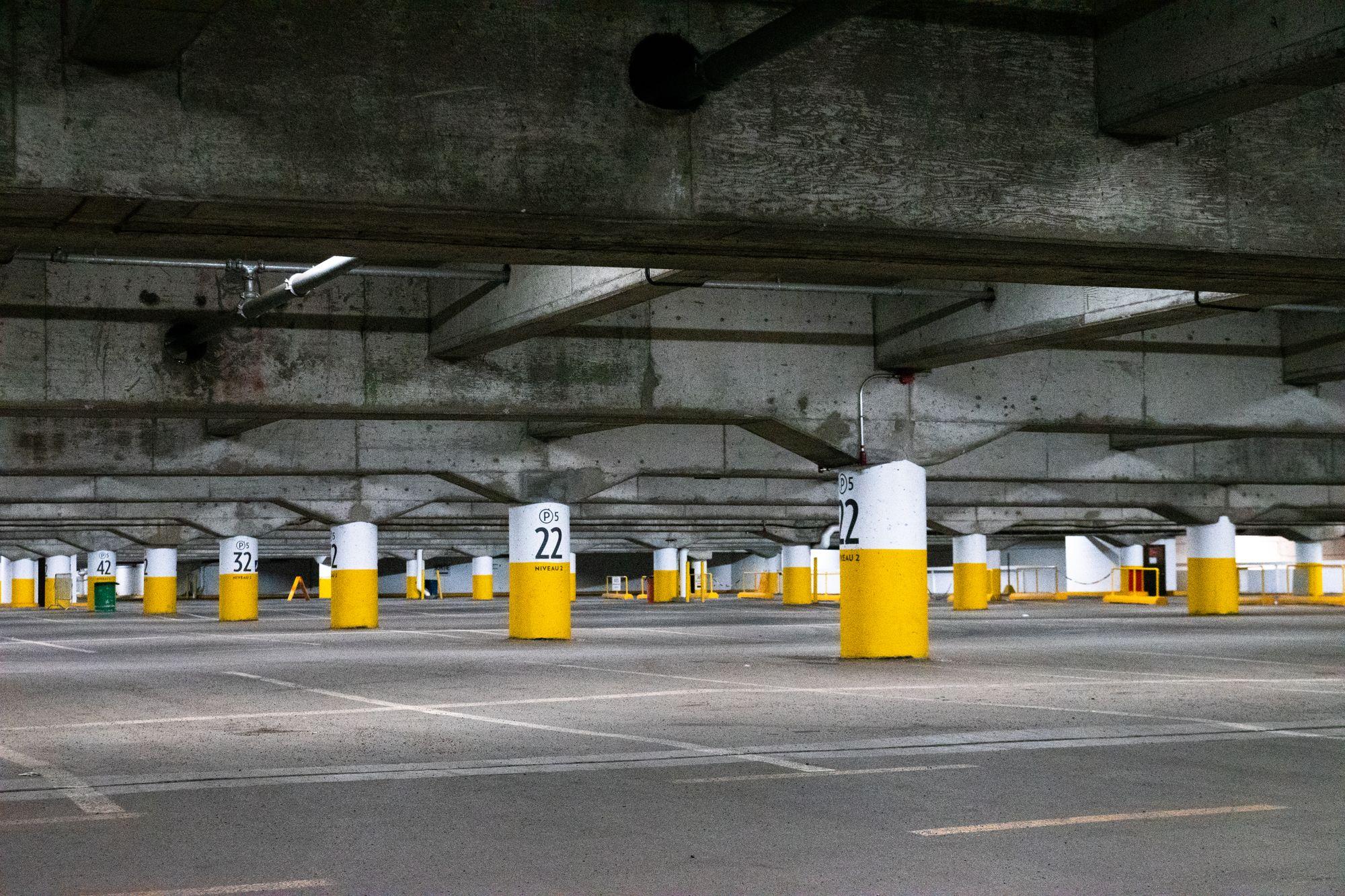
In most Toronto high-rises, the parking garage is the hardest-working structure in the building and the one owners think about least. It carries vehicles every day, takes in salt-laden slush all winter, and often sits directly under landscaped podiums, amenity decks or the building itself. When a garage starts to fail, the signs show up slowly: a stain on the ceiling, a crack that keeps reopening, a puddle that never dries. By the time concrete is falling, the board is usually looking at an expensive, disruptive project.
This guide explains how Ontario condo boards can stay ahead of parking garage deterioration: what the Condominium Act, 1998 says about who repairs what, how inspections and reserve fund planning fit together, what a typical repair program involves, and how to keep owners informed when sections of the garage have to close.
Why Condo Parking Garages Deteriorate
Most underground and podium garages in the Toronto area are built from reinforced concrete. Concrete is durable, but the steel reinforcing inside it is vulnerable once water and chlorides from road salt reach it. Cars carry snow and salt in from the street every winter. As that slush melts, salty water soaks into the slab, works its way through cracks and joints, and starts corroding the steel. Rusting steel expands, which cracks and pushes off the concrete around it. Engineers call this delamination and spalling.
Other common sources of damage include:
- Failed waterproofing. Traffic membranes on driving surfaces and the membranes under landscaped areas or podium decks wear out over time. Once they fail, water reaches the structure.
- Leaking expansion joints and cracks. Joints and moving cracks let water pass to the levels below, where it drips onto cars and staining spreads across the ceiling.
- Drainage problems. Blocked or poorly sloped drains leave ponding water, which keeps the slab wet for longer.
- Freeze-thaw cycles. Garage levels and ramps that are open to the weather go through repeated freezing and thawing, which breaks down concrete that is already saturated.
- Wear on ramps and entrances. Ramps, entry areas and heated ramp systems take the heaviest traffic and the most salt.
None of this is unusual. It is the normal ageing pattern of a concrete garage. The difference between a manageable repair program and an emergency is how early the board finds the problems and how well it plans for them.
Who Is Responsible for Garage Repairs?
The starting point is the Act. Under section 90, the corporation must maintain the common elements and each owner must maintain their own unit, and the duty to maintain includes repairing normal wear and tear. Under section 89, the corporation must repair the units and common elements after damage, which includes repairing and replacing after damage or failure. Section 91 lets a declaration change these default rules, for example by making owners responsible for maintaining parts of the common elements they have exclusive use of.
That is why the declaration and description matter so much for garages. In Toronto condos, parking spaces are set up in different ways:
- Parking spaces that are common elements, sometimes assigned for exclusive use. Structural repairs to the slab, columns and ceiling generally fall to the corporation, though the declaration may assign some maintenance of an exclusive-use area to the owner.
- Parking spaces that are separate units. Here the description sets the unit boundaries, and the declaration sets out who maintains and repairs what. In many buildings, the structural slab is excluded from the unit, but the board should not assume that. Check the documents, and get legal advice where they are unclear.
In practice, the structural elements of a garage (slabs, beams, columns, ramps, waterproofing and drainage) are almost always the corporation's responsibility, and the cost is shared by all owners as a common expense or funded through the reserve fund. Our article on parking and storage locker rules in Ontario condos covers the day-to-day rules side of parking, such as assigned spaces, visitor parking and enforcement.
The corporation's role also has a safety dimension. Section 26 of the Act deems the corporation to be the occupier of the common elements for occupiers' liability purposes. Loose concrete overhead, trip hazards from spalled slabs and icy ramps are exactly the kinds of conditions a board should act on promptly once it knows about them.
Inspections: Finding Problems Before They Grow
Garage problems are much cheaper to fix when they are small. A sensible inspection approach has three layers.
Routine visual checks by the manager and staff
Superintendents and property managers walk the garage regularly. They should be trained to spot and log the early warning signs:
- rust staining or white mineral deposits (efflorescence) on ceilings and walls
- cracks that leak, grow or reappear after patching
- hollow-sounding or loose concrete, or chips of concrete on the floor or on cars
- exposed or rusting reinforcing steel
- ponding water, blocked drains and failing traffic membranes
- damaged expansion joints and worn ramp surfaces
Photos with dates and locations make it far easier for an engineer to see what has changed between visits. Any loose concrete overhead should be treated as urgent: tape off the area and call the engineer.
Reserve fund study site inspections
Every reserve fund study that includes a site inspection should look at the garage. Under section 94 of the Act and Ontario Regulation 48/01, corporations must have a reserve fund study done at least every three years, and the regulation requires the type of study to rotate so that site inspections happen on a regular basis. A reserve fund study is a funding plan, though, not a detailed condition survey. It will usually flag that the garage needs work and estimate when and roughly how much, but it is rarely enough on its own to design a repair.
Detailed condition assessments by a structural engineer
When the reserve fund study or the manager's checks point to deterioration, the next step is a detailed condition assessment by a qualified engineering firm with parking structure experience. These assessments often include sounding the concrete to map delaminated areas, taking cores or chloride samples, and testing the condition of the waterproofing. The result is a repair scope, a priority list, and a cost estimate the board can actually budget against.
For newer buildings, the first-year performance audit matters too. Section 44 of the Act requires the board of a residential condominium to retain a professional engineer or architect to audit the common elements no earlier than six months and no later than 10 months after the declaration and description are registered. Garage leaks, drainage problems and membrane defects found at that stage should be documented and reported through the Tarion process for new condominium common elements, rather than left for owners to fund later.
What a Garage Repair Program Usually Involves
Garage repair projects vary, but most include some combination of:
- Concrete repairs. Removing deteriorated concrete, cleaning or replacing corroded reinforcing steel, and rebuilding the area.
- Waterproofing. Installing or replacing traffic membranes on driving surfaces and ramps, and in some cases replacing the waterproofing under landscaped areas above the garage.
- Joints and cracks. Repairing or replacing expansion joints and routing and sealing cracks.
- Drainage. Clearing, repairing or adding drains and correcting slopes where water ponds.
- Related systems. Work on lighting, line painting, signage, ramp heating, and sometimes mechanical, electrical or sprinkler components that have to be moved to get at the concrete.
Section 97 of the Act matters here. When the corporation carries out its repair and maintenance obligations using materials that are as reasonably close in quality to the original as is appropriate under current construction standards, the work is not treated as an addition, alteration or improvement. That means a like-for-like garage repair does not trigger the section 97 owner notice and approval process. If the board wants to add something new, such as EV charging or a significant change to the garage layout, it should check with its lawyer whether section 97 applies.
Projects of this size are usually run like any other major capital project: an engineer prepares the specifications and tender documents, qualified contractors bid, and the engineer reviews the work during construction. Our guide to planning and overseeing major capital projects walks through tendering, contracts and site review in more detail.
Planning and Paying for Garage Work
Section 93 of the Act says the reserve fund may be used only for the major repair and replacement of the common elements and assets of the corporation. Major garage repairs, membrane replacement and expansion joint replacement are typical reserve fund items. Smaller ongoing work, such as drain cleaning and minor patching, usually comes out of the operating budget.
A few planning habits help boards avoid surprises:
- Feed the engineer's findings into the reserve fund study. If a condition assessment finds more deterioration than the last study assumed, tell the reserve fund study provider. The next update should reflect the real condition of the garage, not the original schedule.
- Act on the funding plan. Section 94 gives the board 120 days after receiving a reserve fund study to review it and propose a plan for future funding, then requires notice to owners. A plan that is made but never followed does not protect the building.
- Phase the work where it makes sense. Many corporations repair a garage level by level over several years, which spreads both the cost and the disruption. Phasing has to follow the engineer's priorities, though. Safety-related repairs cannot wait for a convenient budget year.
- Don't defer repeatedly. Deferring garage work tends to make it bigger. Corrosion keeps going while the board waits, and the repair area grows.
Boards also need to think about winter. Salt is the main driver of garage deterioration, so snow and ice practices at the entrance and on ramps make a difference. Our winter readiness checklist for Ontario condos covers snow, ice and freeze risks across the building.
Managing Disruption for Residents
Garage repairs affect people directly. Owners and tenants may lose their parking space for weeks, have to move cars at short notice, or deal with noise, dust and blocked drive aisles. Good communication is what keeps a necessary project from becoming a governance fight.
- Explain the why early. Share a plain-language summary of the engineer's findings and why the work cannot wait. Photos of spalled concrete and rusted steel are often more persuasive than any report.
- Publish the schedule by zone. Tell residents which areas close when, where they can park in the meantime, and how much notice they will get before their space is affected.
- Plan for vehicle moves. Decide in advance what happens if a vehicle is not moved, and make sure any towing or relocation process follows the corporation's rules and the law.
- Arrange access properly. Where work requires entry into a parking unit, storage locker or exclusive-use area, section 19 of the Act allows the corporation to enter on reasonable notice at a reasonable time to carry out its duties. Give clear written notice.
- Coordinate accessibility needs. Residents who need accessible parking spaces should be planned for first. Ontario's Human Rights Code requires accommodation of disability to the point of undue hardship, so alternative arrangements should be worked out with them directly.
- Keep updates regular. Weekly notices, a project page on the resident portal, or updates in the manager's report keep everyone on the same page.
Questions Boards Should Ask Their Manager and Engineer
Whether the garage is new or decades old, these questions give a board a clear picture of where it stands:
- When was the garage last looked at by a structural engineer, and what did they find?
- What does our current reserve fund study assume about garage repairs, membranes and joints, and when?
- Are there areas of loose or delaminated concrete that need immediate safety work?
- Which parking spaces are units and which are common elements, and does our declaration change the default repair and maintenance rules?
- Is the waterproofing over occupied space or landscaping near the end of its life?
- What is our plan for drain cleaning, crack sealing and other preventive maintenance between major projects?
- If we phase the work, how will that affect the total cost and the risk of further deterioration?
A capable manager should be able to answer most of these from the building's records and bring in the engineer for the rest. If your board is struggling to get straight answers on garage condition or capital planning, that is worth raising. Learn more about our condo property management in Toronto, see the full range of our condominium management services, or request a proposal for your building.
Frequently Asked Questions
Who pays for parking garage repairs in an Ontario condo?
Structural garage repairs are usually the corporation's responsibility and are paid by all owners, through the reserve fund for major repair and replacement or through the operating budget for smaller work. The declaration can change who maintains certain parts, especially where parking spaces are units or exclusive-use common elements, so check your corporation's documents.
How often should a condo parking garage be inspected?
Staff should check the garage routinely, and every reserve fund study with a site inspection should include it. Under Ontario Regulation 48/01, reserve fund studies are required at least every three years. When those checks show deterioration, the board should commission a detailed condition assessment by a structural engineer.
Do owners have to approve garage repairs?
Not for like-for-like repairs. Under section 97 of the Condominium Act, 1998, repair and maintenance work done with materials reasonably close in quality to the original, as appropriate under current construction standards, is not treated as an addition, alteration or improvement. New features or significant changes may require notice to owners, so ask your lawyer.
Can the board close part of the garage during repairs?
Yes, temporary closures are a normal part of garage repairs. The board should give residents clear notice, offer alternative parking where possible, plan for accessibility needs, and give reasonable notice before entering units or exclusive-use areas under section 19 of the Act.
This article is general information about Ontario condominium practice and is not legal or engineering advice. Every corporation's declaration and building are different, so consult your corporation's lawyer and a qualified engineer about your specific situation. You can read the current Condominium Act, 1998 on Ontario's e-Laws site.