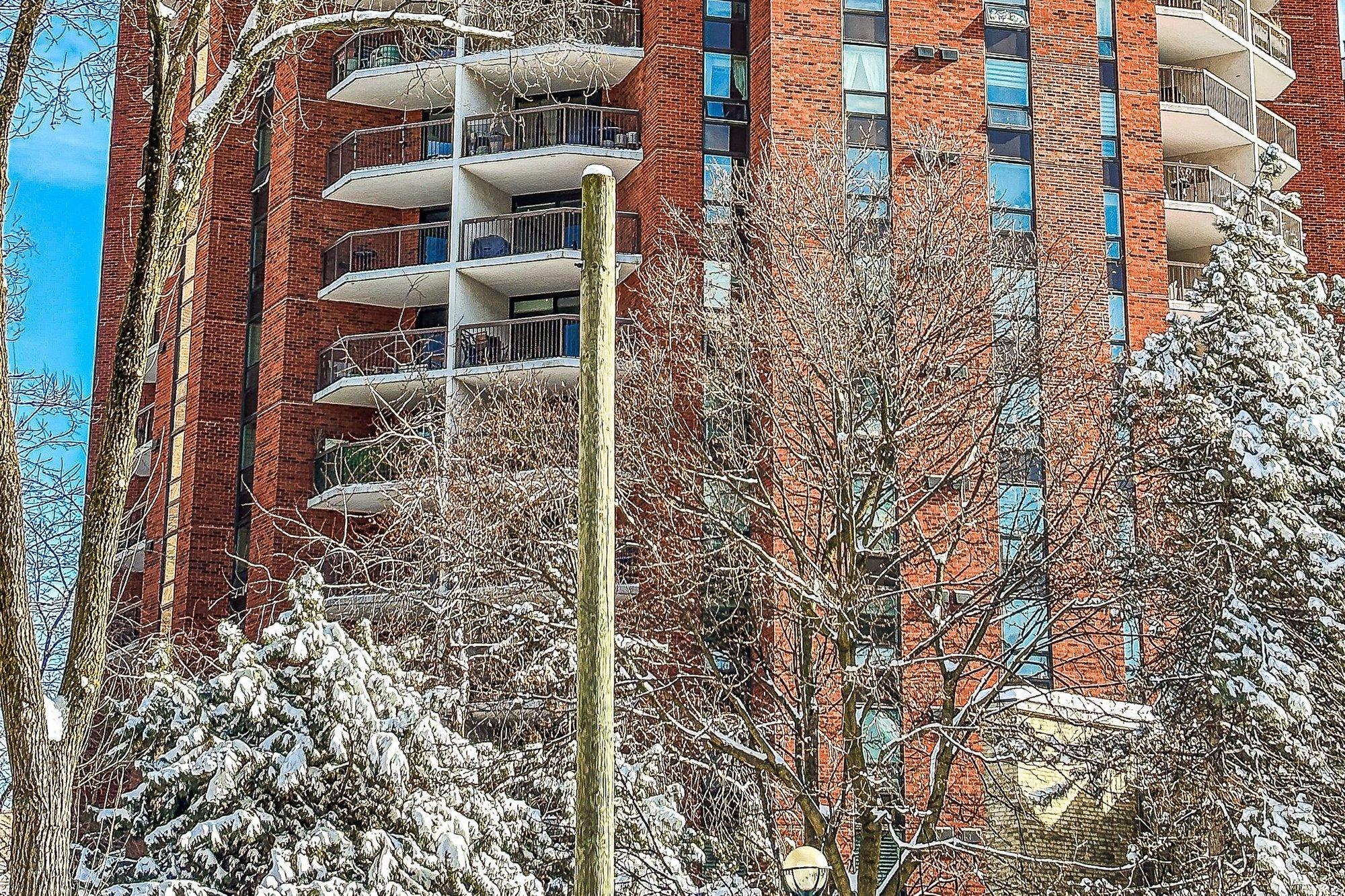
Why winter planning starts in the fall
Ontario winters test every part of a condominium: the snow contract, the heating plant, the building envelope, the garage, and the board's communication with owners. Most winter problems that reach a board meeting, such as a slip on an icy walkway, a frozen sprinkler pipe in a stairwell, a garage ramp no one salted, or a heating complaint on the first cold night, are easier and cheaper to prevent than to fix.
This article gives Ontario and Toronto condo boards a practical winter readiness checklist. It covers what the law asks of the corporation, the Toronto snow and ice rules that apply to many buildings, the 60-day notice rule for snow and ice injury claims, and the operational checks your manager should complete before the first storm. It is general information, not legal advice.
What the corporation is responsible for
Under section 90(1) of the Condominium Act, 1998, the corporation must maintain the common elements, and section 89(1) requires it to repair the units and common elements after damage. Both duties are subject to the declaration, which can shift some maintenance or repair to owners. Section 17(2) gives the corporation the duty to control, manage and administer the common elements and its assets.
For winter, that usually means the corporation is responsible for clearing and salting walkways, entrances, ramps, driveways and parking areas that are common elements. Townhouse corporations and buildings with exclusive-use areas need to check their declaration carefully: an owner may be responsible for clearing their own driveway, porch or balcony, while the corporation remains responsible for shared roads and walkways. If the documents are unclear, get a legal opinion before winter rather than in the middle of a dispute.
Directors carry the oversight. Section 37(1) requires directors and officers to act honestly and in good faith and to exercise the care, diligence and skill that a reasonably prudent person would exercise in comparable circumstances. A documented winter plan, a clear contract and good records are the simplest way to show that care was taken.
Occupiers' liability and the 60-day notice rule
The Occupiers' Liability Act applies to condominium properties. Section 3(1) says an occupier owes a duty to take such care as in all the circumstances is reasonable to see that people entering the premises, and their property, are reasonably safe while on the premises. The duty applies whether the danger comes from the condition of the premises or from an activity on them.
Since January 29, 2021, section 6.1 has added a notice requirement for snow and ice injuries. No action for damages for personal injury caused by snow or ice can be brought against an occupier, or against an independent contractor hired by the occupier to remove snow or ice, unless written notice of the claim, including the date, time and location of the occurrence, is personally served or sent by registered mail within 60 days after the injury. An occupier that receives notice must pass a copy to other occupiers and to its snow removal contractor for the relevant period, and a contractor that receives it must pass it to the occupier.
The 60-day rule has exceptions. It does not bar an action where the injured person died as a result of the injury, or where a judge finds a reasonable excuse for the missing or insufficient notice and the defendant is not prejudiced. The practical point for boards is that any written notice about a fall must go to the manager, the insurer and the snow contractor promptly, and the site records for that day must be preserved.
Toronto snow and ice rules that affect condo buildings
Municipal by-laws set rules for public sidewalks and some private areas. In Toronto, Chapter 719 of the Toronto Municipal Code applies. Section 719-2 requires every owner or occupant of a building to clear and completely remove snow and ice from any sidewalk on a highway in front of, alongside or at the rear of the building within 12 hours after the snow, rain or hail has stopped, and to apply sand, salt or another suitable material if the sidewalk becomes slippery again. That obligation does not apply where the City, under its policy, has taken responsibility for clearing that sidewalk.
According to the City's sidewalk clearing page, City crews clear public sidewalks when snow reaches 2 cm and has stopped falling, or when icy conditions require it. For smaller snowfalls, residents and businesses are expected to clear the sidewalks next to their property within 12 hours. The City also says private property, including driveways, parking spaces, steps, ramps and landings, must be cleared within 24 hours after snowfall ends, that snow must not be pushed onto sidewalks, roads or bike lanes, and that snow should be cleared around fire hydrants.
Section 719-4 also matters for towers and buildings close to the street. Where snow or ice accumulates on a building to an extent that is dangerous to people using the highway, sidewalk or laneway below, the owner or occupant must have it removed immediately and take proper precautions to warn and protect the public during removal. Ice forming on canopies, ledges and balconies above a sidewalk should be part of every winter inspection.
Outside Toronto, including Durham Region municipalities, sidewalk clearing rules and timelines vary. Ask your manager to confirm the current by-law for each property and to build it into the snow contract.
The snow and ice contract
The contract is where most winter risk is controlled. A vague contract that says "snow removal as required" leaves the board guessing about what was done and when. Our article on selecting, contracting and monitoring vendors covers vendor selection in general; for winter contracts, make sure the agreement addresses the following:
- Scope and site map. A marked-up plan showing every walkway, entrance, exit door, ramp, stair, driveway, fire route, garage ramp, loading area and public sidewalk the contractor must clear, and the order of priority.
- Triggers and response times. The accumulation depth that triggers plowing or shovelling, how soon after the trigger the contractor must arrive, and when salting or sanding is required for freezing rain or refreeze.
- Municipal timelines. Clearing schedules that let the corporation meet the 12-hour and 24-hour Toronto timelines, or the equivalent local rules.
- Site logs. Time-stamped records of every visit, the areas cleared, the material applied and the weather conditions, ideally with photos. These records are often the corporation's best evidence if a claim arrives.
- Insurance and indemnity. Proof of commercial general liability insurance, with the corporation named as an additional insured where your broker recommends it, and an indemnity reviewed by your lawyer.
- Snow storage. Where snow will be piled so it does not block sight lines, drains, fire hydrants, fire department connections or exits, and when it will be hauled away.
- Notice clause. A requirement for the contractor to forward any claim or notice it receives to the manager immediately, consistent with section 6.1 of the Occupiers' Liability Act.
Ontario law does not set a required contract type, response time or trigger depth for condominium snow removal. Those are business decisions for the board, informed by the building's layout, traffic and budget.
Heating and mechanical systems
The first cold week is when heating problems show up. Ask your manager to confirm, before November, that:
- Boilers, heat exchangers, make-up air units and hydronic pumps have had their seasonal service, and any deficiencies have a repair date.
- The changeover from cooling to heating in two-pipe systems is scheduled and owners have been told when it will happen.
- Garage heaters, door heaters and heat tracing on exposed pipes and drains have been tested.
- Emergency generators and fuel supplies have been inspected, if the building has them.
- Contractors for heating, plumbing and restoration have after-hours contact details on file. Our article on after-hours and emergency response explains what to require from your manager outside office hours.
In-suite equipment such as fan coils may be the owner's or the corporation's responsibility depending on the declaration and any standard unit by-law. Clarify that before the season so heating calls are routed correctly.
Freeze risks and water damage
Frozen pipes are one of the most expensive winter problems in Ontario condos. Freezing often happens where pipes run through unheated or poorly heated spaces: stairwells, garages, vestibules, mechanical penthouses, and exterior walls behind cabinets. A burst pipe can damage several units and common areas before anyone notices.
- Identify dry and wet sprinkler zones in cold spaces and confirm the fire protection contractor has completed the required checks and drained low points where applicable.
- Shut off and drain exterior hose bibs and irrigation lines.
- Check that garage and vestibule doors close fully and that weather stripping is intact.
- Inspect roof drains, scuppers and balcony drains so meltwater can escape; blocked drains can lead to ice build-up and leaks.
- Remind owners who travel in winter to keep heat on in their units and to arrange for someone to check the suite, in line with any rules the corporation has adopted.
For more detail on detection, shut-off valves and insurance, see our articles on preventing water damage in Toronto condos and water damage prevention programs. Section 99 of the Act requires the corporation to insure against major perils, which include water escape, so containing damage quickly also protects the corporation's claims history.
Garages, entrances and fire safety
Salt, meltwater and freeze-thaw cycles are hard on parking structures. Ask for a walk-through of garage ramps, trench drains, expansion joints and the slab surface before winter, and confirm the plan for washing salt off the garage floor in spring. Entrance mats, interior signage for wet floors and regular checks of lobby floors reduce slip risks inside the building as well as outside.
Exits must stay usable in winter. Exterior exit doors, the paths leading from them, fire routes and fire department connections should be cleared after every snowfall, not just the front entrance. Our article on fire safety duties for Toronto condo boards covers the Fire Code duties boards should know.
Communicating with owners and residents
Owners are more patient with winter disruption when they know what to expect. Before the season, send a short notice that covers:
- When the heating changeover will happen and who to call about heating problems.
- Owner responsibilities under the declaration and rules, such as clearing balconies or driveways, keeping heat on in vacant units and not storing items that block exits.
- Parking restrictions during snow clearing, if the corporation uses them.
- The emergency contact number for after-hours issues.
A one-page winter readiness checklist
- Review the declaration for who clears which areas.
- Confirm the municipal sidewalk and private property clearing rules for each property.
- Sign or renew the snow and ice contract, with a site map, triggers, response times, logs and insurance.
- Collect the contractor's insurance certificate and confirm notice and indemnity terms with your lawyer and broker.
- Complete the seasonal heating, garage heater and heat tracing service.
- Check cold spaces for freeze risk, drain exterior lines and confirm sprinkler contractor checks.
- Inspect roof, balcony and garage drains, and look for ice hazards above sidewalks.
- Update after-hours contacts and the emergency contractor list.
- Send the winter notice to owners and residents.
- Set up a process to forward any snow or ice injury notice to the insurer, lawyer and contractor right away, and keep the site logs.
How Brilliant Property Management can help
Brilliant Property Management has supported Ontario condominium boards since 2002. We help boards plan for winter with clear snow contracts, seasonal maintenance schedules, site records and owner communication, so directors are not caught off guard by the first storm. Learn more about our condo property management in Toronto, review our management services, or request a proposal for your building.
Frequently asked questions
Who is responsible for clearing snow at an Ontario condominium?
For the common elements, the condominium corporation is normally responsible, because section 90(1) of the Condominium Act, 1998 requires it to maintain the common elements, subject to what the declaration says. Some declarations shift certain maintenance, such as clearing a townhouse driveway or a balcony, to owners. Public sidewalks are governed by municipal by-laws, which differ from one municipality to the next.
How quickly does a Toronto condo have to clear the sidewalk in front of the building?
Chapter 719 of the Toronto Municipal Code requires owners or occupants to clear snow and ice from the public sidewalk in front of, alongside or behind the building within 12 hours after the snowfall ends, unless the City has taken on that sidewalk. The City says its crews clear public sidewalks once snow reaches 2 cm, so owners handle smaller snowfalls. Private areas such as walkways, steps, ramps and parking spaces must be cleared within 24 hours after snowfall ends.
Is there a deadline for someone to claim they slipped on ice at our building?
Section 6.1 of the Occupiers' Liability Act says no action for personal injury caused by snow or ice can be brought against an occupier or its snow-removal contractor unless written notice of the claim is served or sent by registered mail within 60 days after the injury. There are exceptions, including where a judge finds a reasonable excuse and no prejudice. Report any notice you receive to your insurer and lawyer right away.
Should the snow removal contract be seasonal or per visit?
Ontario law does not prescribe a contract type. Seasonal, per-visit and hybrid contracts all work if the terms are clear: trigger depths, response times, the areas to clear, salting, site logs and insurance. Boards should compare the options against the building's layout and budget and record the decision.
This article is general information about the Condominium Act, 1998, the Occupiers' Liability Act and Chapter 719 of the Toronto Municipal Code, current as of October 2026. It is not legal advice. Your obligations depend on your declaration, by-laws, contracts, insurance policy and local by-laws. Consult your condominium lawyer and insurance broker about your corporation's situation.