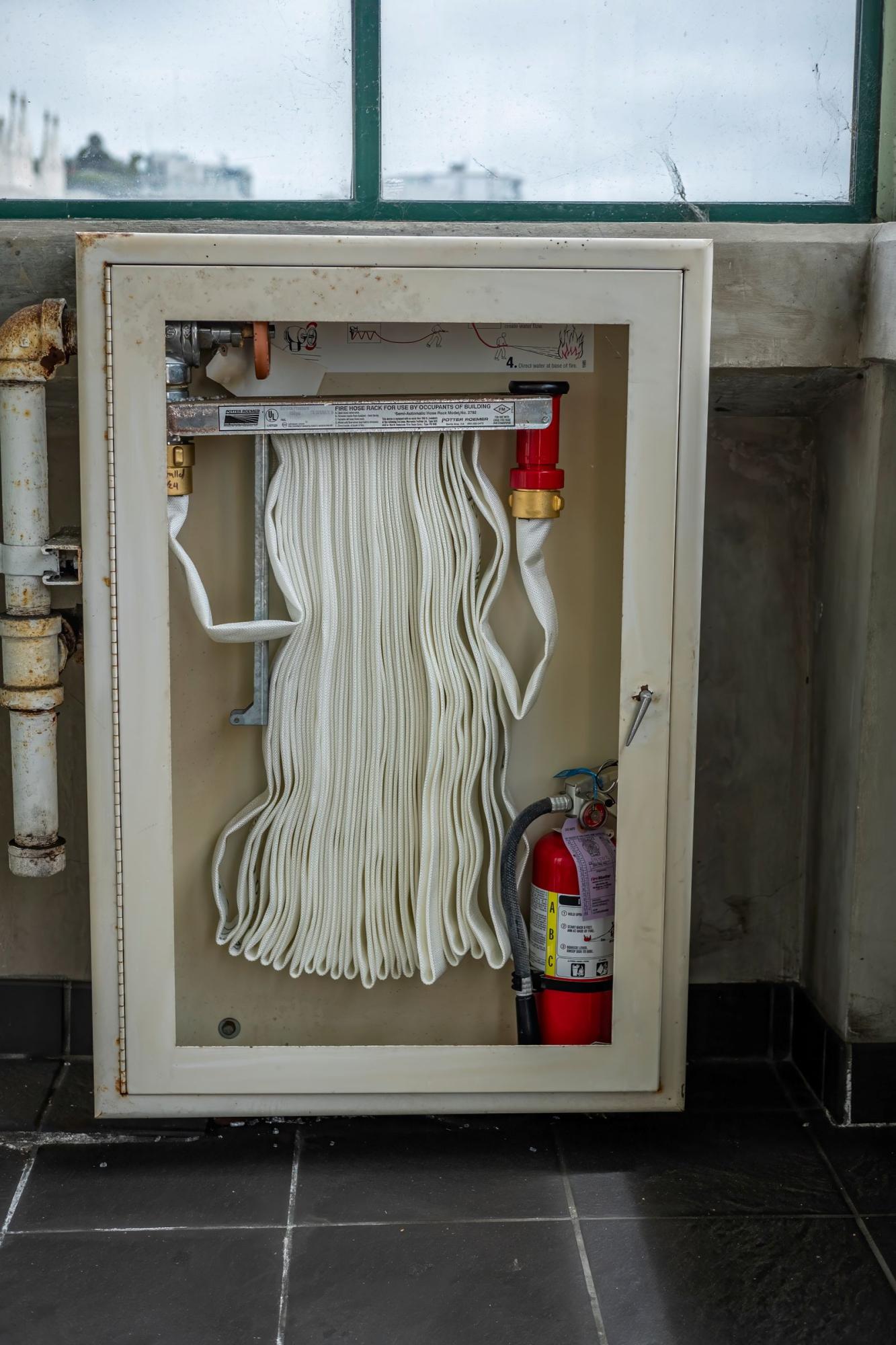
Why fire safety sits with the board
Fire safety in a condominium can feel like the contractors' job. Legally, though, the corporation carries the duty, and the board is accountable for making sure the work happens and is documented.
The Ontario Fire Code (O. Reg. 213/07) defines an "owner" as any person, firm or corporation having control over any portion of a building, and states that, unless otherwise specified, the owner is responsible for carrying out the Code's provisions. A condominium corporation controls the common elements, so it is the party local fire officials look to for the fire safety plan, the life safety systems in common areas and the records that prove they are maintained. Under the Condominium Act, 1998, the corporation must also maintain the common elements (section 90, subject to the declaration under section 91), and directors must act honestly and in good faith and with the care, diligence and skill of a reasonably prudent person (section 37).
This guide explains what the Fire Code actually requires of condo corporations, what changed on January 1, 2026, and how boards can oversee it without becoming fire protection engineers. It is general information, not legal or engineering advice; your fire safety consultant, fire protection contractor and local fire department are the authorities for your building.
Who is responsible for what
Fire safety duties in a condo are split, and confusion over the split is behind many deficiencies.
- The corporation is responsible for the fire safety plan, supervisory staff arrangements, fire drills, and the inspection, testing and maintenance of building systems such as the fire alarm system, sprinklers, standpipes, emergency lighting, fire doors and portable extinguishers in common areas.
- Unit owners are generally responsible for maintaining the unit, including in-suite smoke and carbon monoxide alarms, unless the declaration shifts that work to the corporation or the devices form part of a building-wide system the corporation maintains.
- Landlords of rented units carry the in-suite alarm duties. The Fire Code says that for a rental suite, only the landlord (the unit owner, including an agent acting for them) is treated as the owner for the smoke alarm and carbon monoxide alarm sections. The landlord must give the tenant the manufacturer's maintenance instructions, and the tenant must tell the landlord promptly if an alarm is disconnected, not working or impaired.
- Everyone is bound by the rule that no person may disable a smoke alarm or a carbon monoxide alarm.
Section 19 of the Condominium Act lets the corporation, on reasonable notice, enter a unit at a reasonable time to perform its duties. Corporations testing in-suite devices on the building system should give written notice and record units they could not access.
The fire safety plan: what the Fire Code requires
Section 2.8 of the Fire Code applies to buildings with a residential occupancy where the occupant load exceeds 10, and to buildings of four storeys or more, counting storeys below grade. That captures most condominium apartment buildings in Toronto and the GTA. In those buildings a fire safety plan must be prepared, approved and implemented.
What the plan must cover
Article 2.8.2.1 lists the required content. The plan must:
- set out emergency procedures, including sounding the alarm, notifying the fire department, instructing occupants, evacuating occupants with special provisions for people who need assistance, using elevators, and confining, controlling and extinguishing the fire;
- provide for the appointment and organization of supervisory staff to carry out fire safety duties;
- provide for training supervisory staff and instructing other occupants;
- include documents and diagrams showing the type, location and operation of the building's fire emergency systems;
- provide for fire drills and set out drill procedures;
- provide for controlling fire hazards and maintaining the building's life safety facilities; and
- set out alternative measures for occupant safety during a shutdown of any fire protection equipment or system.
In buildings within the scope of Subsection 3.2.6 of Division B of the Building Code, the requirements for high buildings, the plan must also cover the voice communication system, how supervisory staff initiate smoke control or other emergency systems until the fire department arrives, fire department access, and operating instructions for the fire emergency systems. Your fire safety consultant can confirm whether your building is in scope.
Keeping the plan current
- The plan must be kept in the building in an approved location, typically a fire safety plan box near the main entrance or fire alarm annunciator.
- It must be reviewed as often as necessary, and at least every 12 months, and revised when the use or characteristics of the building change.
- Before demolition or construction begins, including hot surface applications such as torch-applied roofing, the plan must be revised to add temporary alternative measures and procedures to control the construction hazards. Boards planning balcony, garage or roofing projects should build this into the project schedule.
- At least one copy of the fire emergency procedures must be prominently posted and maintained on each floor area.
- Every member of the supervisory staff must receive a copy of the fire emergency procedures and their duties.
How this works in Toronto
Toronto Fire Services reviews new fire safety plans and major revisions, with a site visit and a fee. Its published Toronto Fire Services fire safety plan fee and revision notes explain that minor changes, such as replacing a fire alarm panel or installing an electromagnetic lock, and clerical changes do not attract the fee. Clerical changes include updates to the property management company, superintendent, fire protection company or monitoring company, and changes to the list of residents who require assistance. Those updates go into the approved copy on site, and the revised pages are emailed to Toronto Fire Services for its records. If your corporation is changing managers, add the fire safety plan update to the handover list; our guide to what boards should demand when changing management companies covers the rest of that transition.
Supervisory staff and fire drills
"Supervisory staff" in the Fire Code means occupants of a building who have some delegated responsibility for the fire safety of other occupants under the fire safety plan. In a condo that is often the superintendent, security or concierge staff and, in some buildings, trained volunteer residents. The Code requires that supervisory staff:
- are instructed in the fire emergency procedures before they are given any fire safety responsibility;
- are available on notification of a fire emergency, although outside certain occupancies such as care facilities and hotels they need not be in the building at all times; and
- have ready access to any keys or special devices needed to operate the fire alarm system or reach fire protection equipment.
Fire drill procedures must be prepared in consultation with the Chief Fire Official. A drill for supervisory staff is required at least once in each 12-month period, and at least every three months in buildings within the scope of Subsection 3.2.6 of the Building Code. A record of every drill must be kept for at least 12 months. Boards should ask management for the drill record, not just confirmation that a drill happened.
Inspection, testing and records
Part 6 of the Fire Code sets inspection, testing and maintenance requirements for fire protection equipment. Some of the points boards most often need to know:
- Fire alarm system. It must be inspected and tested in conformance with CAN/ULC-S536, the national inspection and testing standard. A description of the system, as that standard requires, must be kept current at an approved location in the building. The central alarm and control facility must be checked daily for trouble indications.
- Monitoring. Where the system must be monitored and a central station provides that service, the corporation must obtain written documentation that the service complies with NFPA 71 or CAN/ULC-S561.
- Fire doors. Doors in fire separations must be kept closed when not in use unless designed to close automatically, must be inspected monthly, and may not be wedged or blocked open. Closers and latching hardware must be kept working.
- Portable extinguishers. They must be kept operable, fully charged, visible and accessible.
- Smoke and carbon monoxide alarms. They must be maintained in operating condition, including power supplies, and replaced within the time frame in the manufacturer's instructions.
Records matter as much as the tests. The Fire Code requires records to be kept at the building for at least two years, and at least the most recent and immediately preceding record of each test or inspection must be retained. Electronic records are acceptable if they can be made readily available to the fire official on request.
Ask your contractor for deficiency lists that are separate from general notes, and track each deficiency to completion. Board minutes should record when deficiencies were reported, what was approved and when the work was finished.
What changed on January 1, 2026
Ontario Regulation 87/25 amended the Fire Code, mostly effective January 1, 2026. Two changes matter most to condo boards.
Carbon monoxide alarms in existing buildings
Section 2.16 has required carbon monoxide alarms in existing residential buildings that contain a fuel-burning appliance, a fireplace or a storage garage since 2015; as of January 1, 2026, it also applies where the residential occupancy is served by a forced-air fuel-burning appliance outside the building, and it requires alarms in more locations, including each storey without a sleeping area in affected suites and public corridors heated by a forced-air fuel-burning appliance. It does not apply where carbon monoxide alarms were installed in accordance with the Building Code as it read on or after January 1, 2025. Depending on the building, alarms are required:
- adjacent to each sleeping area, and on each storey without a sleeping area, in a suite that has a fuel-burning appliance, flue or fireplace;
- in the service room where a fuel-burning appliance is installed, and in suites that share a wall or floor/ceiling assembly with that service room;
- in suites that share a wall or floor/ceiling assembly with a storage garage, such as an underground parking level; and
- where a forced-air fuel-burning appliance directly heats public corridors, in the service room, in those corridors (at least one in each divided portion, spaced not more than 25 metres apart) and in the suites it heats.
Alarms must meet CSA-6.19 or UL 2034, may be hard-wired, battery-operated or plugged in, and those near sleeping areas must be audible throughout the sleeping area with doors closed. Boards should have a qualified consultant map which suites and common areas are affected, decide which devices the corporation will install and which are owners' or landlords' responsibility, and tell owners in writing.
Administrative monetary penalties
Ontario Regulation 260/25, in force January 1, 2026, lets municipalities choose to issue administrative monetary penalties for listed Fire Code provisions, including the fire safety plan, posting, supervisory staff and fire drill requirements. The penalty is $200 the first time an order is issued for a contravention of a provision, $400 the second time and $600 for the third or later time for the same provision. Whether penalties are in use depends on your municipality, so ask your local fire department. Penalties sit alongside the existing inspection orders and prosecutions.
A board checklist for fire safety oversight
- Confirm the date the fire safety plan was last approved and last reviewed, and diarize the next 12-month review.
- Check that the plan's contact pages are current, including management, superintendent, fire protection contractor and monitoring company.
- Confirm who the supervisory staff are, that each has been instructed, and that the keys they need are available on every shift.
- Ask for the most recent drill record and confirm the drill frequency that applies to your building.
- Review the annual fire alarm inspection report and the deficiency list, and track open items at each board meeting.
- Confirm that carbon monoxide alarm coverage under the 2026 rules has been assessed for suites, service rooms and corridors, and that owners have been notified of their part.
- Make sure the plan is revised before any construction or hot work starts.
- Keep the fire safety records at the building, or electronically in a form that can be produced on request, for at least two years.
Fire safety is one part of a building's emergency program. For floods, power outages and other events, see our article on broader emergency preparedness planning.
How professional management helps
Brilliant Property Management has supported Ontario condominium boards since 2002. On fire safety, a manager schedules and supervises contractor inspections, keeps the fire safety log and deficiency tracker, coordinates fire safety plan reviews and updates with the fire department, organizes drills and staff instruction, and brings the board clear reports on what is outstanding. Learn more about our condo property management in Toronto, see our full services, or invite a proposal through our request for proposal page.
Frequently asked questions
Does every Ontario condo need a fire safety plan?
Under Section 2.8 of the Ontario Fire Code, a fire safety plan is required in buildings with a residential occupancy where the occupant load exceeds 10, and in buildings of four storeys or more counting storeys below grade, among other cases. Most Toronto condominium apartment buildings fall within these rules. The plan must be prepared, approved by the fire department and implemented, then reviewed at least every 12 months.
How often must a condo hold fire drills?
The Fire Code requires a fire drill for supervisory staff at least once in each 12-month period. In buildings within the scope of Subsection 3.2.6 of Division B of the Building Code (the high-building requirements), supervisory staff drills must be held at least every three months. A record of each drill must be kept for at least 12 months.
Who is responsible for smoke and carbon monoxide alarms inside a condo unit?
The Fire Code requires smoke and carbon monoxide alarms to be kept in operating condition, and no one may disable them. For a rented unit, the Fire Code treats the landlord, meaning the unit owner or their agent, as responsible, not the tenant. For owner-occupied units, the unit owner is usually responsible, but check your declaration and whether in-suite devices are part of a building-wide system the corporation maintains.
What changed in the Ontario Fire Code on January 1, 2026?
Ontario Regulation 87/25 expanded the existing carbon monoxide alarm requirements for residential buildings that contain fuel-burning appliances, fireplaces or storage garages (adding, for example, alarms on each storey of affected suites without a sleeping area and in public corridors heated by a forced-air fuel-burning appliance), updated fire alarm inspection and testing to current CAN/ULC standards, and made other changes. Separately, Ontario Regulation 260/25 lets municipalities issue administrative monetary penalties for listed Fire Code contraventions, starting January 1, 2026.
Do we need Toronto Fire Services to re-approve our plan when we change property managers?
According to Toronto Fire Services, changes to contact information such as the property management company, superintendent, fire protection company or monitoring company are clerical changes. Update the approved copy kept on site and email the revised pages to Toronto Fire Services for its records. A new plan or a major revision goes through a review with a fee.
This article is general information about the Ontario Fire Code (O. Reg. 213/07, as amended by O. Reg. 87/25), Ontario Regulation 260/25 and the Condominium Act, 1998, current as of October 2026. It is not legal or engineering advice. Requirements depend on your building's occupancy, height, systems and declaration, and the local fire department is the authority on approval and enforcement. Consult your fire safety consultant, fire protection contractor and condominium lawyer about your corporation's specific obligations.