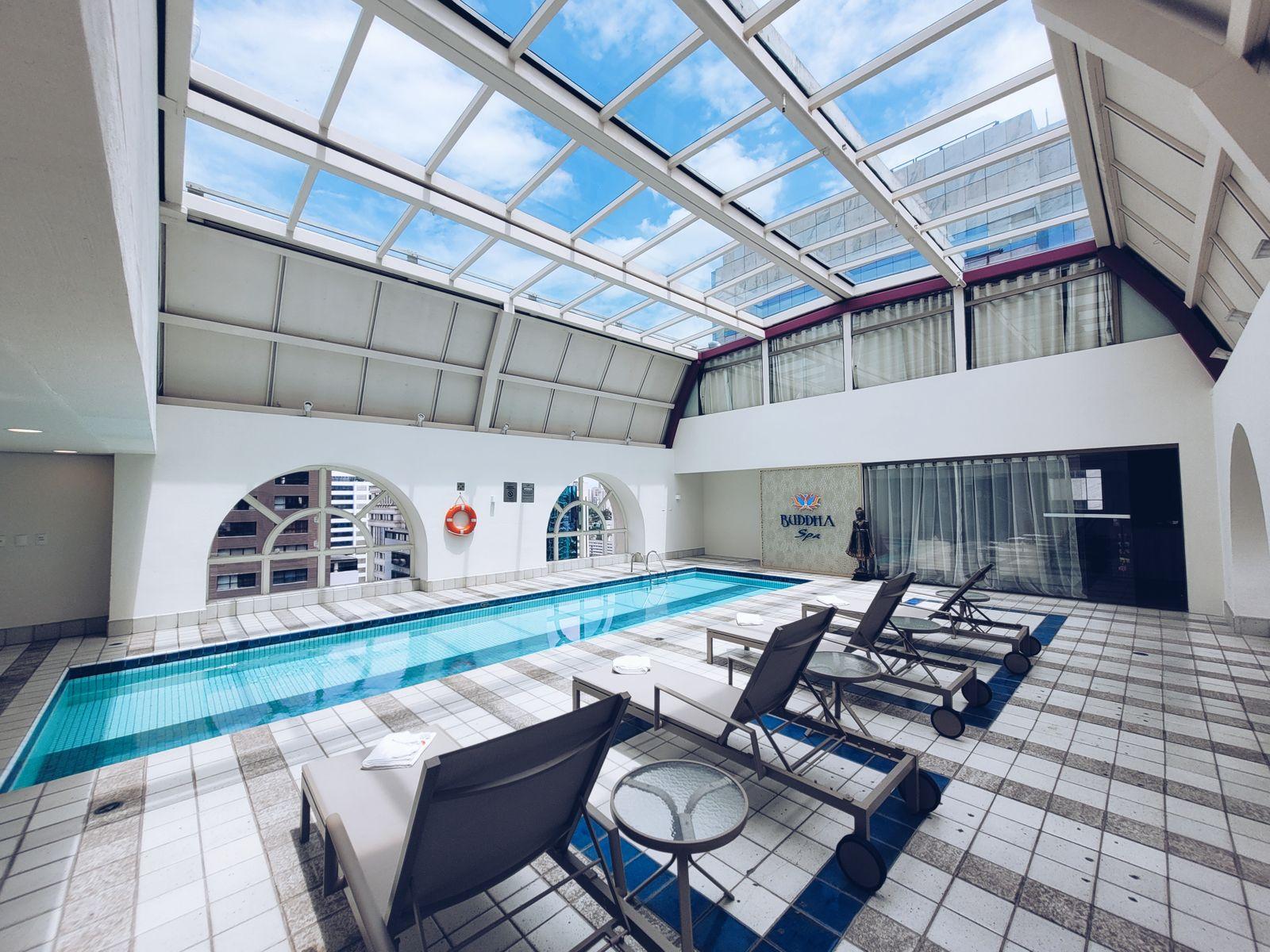
For many Toronto condominiums, the pool and hot tub are among the most used and most visible amenities. They are also the amenities most likely to bring a public health inspector to the building, and one of the few places where a missed log entry or a broken timer can close a facility on the spot. This guide explains how Ontario's public pool rules apply to condominium pools and spas, what the board, the manager and the pool operator each need to do, and how to write pool rules that owners will accept.
Does Ontario's public pool regulation apply to a condo pool?
In most cases, yes. Pools and spas are regulated under the Health Protection and Promotion Act through R.R.O. 1990, Reg. 565 (Public Pools). The word "public" can be misleading. The regulation is not limited to municipal pools that anyone can walk into.
Section 2 of Reg. 565 sets out two classes of public pool. A Class B pool includes a pool operated in conjunction with a condominium, co-operative or community property that contains six or more dwelling units or suites, for the use of the owners or members and their visitors. Section 4.1 exempts pools used by the occupants and visitors of a condominium with fewer than six dwelling units or suites. So a typical Toronto mid-rise or high-rise condo pool is a Class B public pool and must meet the regulation.
Hot tubs are covered too. Under section 4(2), the regulation applies to a public spa operated in conjunction with a condominium that contains six or more dwelling units or suites, for the use of the owners and their visitors, whether or not the spa sits beside a pool. The regulation defines a public spa as a hydro-massage pool that is not drained, cleaned or refilled before each user and that uses hydrojets, air bubbles or current flow over most of the pool area. Cold plunge pools and hot water pools have their own added requirements, so if your building has one, check those sections specifically.
Who is the "owner" and who is the "operator"?
Reg. 565 places duties on two parties. The owner is the owner of the pool or spa, which for a condominium is usually the corporation, because the pool is normally part of the common elements. The corporation already has a general duty under section 90 of the Condominium Act, 1998 to maintain the common elements, and section 89 requires it to repair them after damage, subject to what the declaration says.
Section 6 requires every owner of a public pool or public spa to designate an operator, and requires the operator to be trained in pool and spa operation and maintenance, filtration systems, water chemistry and the relevant safety and emergency procedures. The operator might be the superintendent, a member of the management team or a pool contractor; what matters is that someone is named in writing and properly trained.
Section 6 also requires the owner and operator to keep the pool or spa and its equipment in a safe and sanitary condition, and to make the pool or spa inaccessible outside the daily use period to anyone not involved in its operation, inspection or maintenance. That last point ties directly to your access control. If residents can fob into the pool room after hours, that is a compliance issue, not just a rules issue. Our post on managing key fobs and access control in Ontario condos covers how to set up that kind of time-based access.
Notifying public health before opening or re-opening
Section 5 of Reg. 565 contains notice requirements boards should know about, because they often come up during renovations:
- After construction or alteration: at least 14 days before the pool or spa is put into use, the owner or the owner's agent must notify the medical officer of health or a public health inspector in writing, including the building permit number, whether preparations are complete, the intended opening date, the pool class and the operator's name and address. The pool cannot open or re-open after construction or alteration without written permission from the medical officer of health or a public health inspector.
- After a long closure: at least 14 days before re-opening after any closure of more than four weeks, the owner or operator must notify the health unit in writing of the re-opening date, the operator's name and address and, for a pool, its class.
Routine maintenance, repair or like-for-like replacement of existing equipment is not an "alteration" for this section. But a retiling or deck project that keeps the pool closed for more than four weeks still triggers the re-opening notice. Build that 14-day window into your project schedule and your notices to owners, so the contractor's finish date is not mistaken for the opening date. Outdoor pools that close for the winter are in the same position each spring.
Daily records and what an inspector looks for
Under section 8, the operator must keep and sign daily records for each operating day. These include the estimated number of bather uses, the make-up water meter reading, any emergencies, rescues or equipment breakdowns, the water tests the regulation requires and when they were done, the emergency stop button test time where applicable, whether a spa was drained and refilled where that applies, and the type and amount of chemicals added by hand. Section 9 requires those records to be kept for one year and to be available for viewing by a medical officer of health or a public health inspector at any time.
In Toronto, Public Health inspects recreational water facilities through its SwimSafe program and publishes the results online, and condominium pools and spas are among the facilities listed. Under section 5(4), the operator must post inspection results as the inspector requests. Because owners and buyers can look those results up, a poor history is a reputational issue too.
For boards, the practical step is simple: ask the manager to include pool and spa status in the monthly management report, including the latest inspection result, any infractions and how they were corrected, and confirmation that the daily logs are complete and signed.
Lifeguards and supervision in a condo pool
Many boards assume a condo pool never needs a lifeguard. The regulation is more specific than that. Section 17 sets lifeguard staffing for public pools, but section 17(19) exempts a Class B pool (other than one operated with a child care centre or day camp) from the supervision requirements of that section in two situations:
- The pool has a water surface area of 93 square metres or less, and a notice is posted in a conspicuous location within the pool enclosure, in letters at least 25 millimetres high, stating that the pool is unsupervised and that bathers under 12 are not allowed in the enclosure unless accompanied by a parent or agent who is at least 16.
- The pool has a water surface area greater than 93 square metres, the number of bathers does not exceed ten, and the same notice is posted with an added statement that the total number of bathers on the deck and in the pool shall not exceed ten.
If your pool is larger than 93 square metres and you want to allow more than ten bathers at a time, the lifeguard requirements in section 17 come into play. Most condominiums choose to stay within the exemption, which means the bather limit and the unsupervised-pool notice are not optional extras. They are what keeps the building inside the exemption, so your rules, signage and any booking system should all match.
Section 17(1) also refers to written emergency and operational procedures at the pool. Whatever your supervision model, confirm with your operator what is in place and make sure staff and security know where the emergency telephone is.
Required notices and equipment
Section 19 lists notices every public pool must display in at least two places, including that no one with a communicable disease or open sores may enter, no glass containers on the deck or in the pool, no polluting the water, no boisterous play, the maximum number of bathers permitted, and the location of a telephone available for emergency use. Other required markings cover the emergency telephone itself, shower notices at deck entrances, depth markings and, for shallower pools, a no-diving warning. The maximum bather load comes from a formula in section 10 based on the deep and shallow surface areas of the pool.
Hot tubs carry their own set of requirements:
- Caution notice: section 19.1 prescribes a caution message to be posted at each entrance to the spa. It includes that children under 12 are not allowed in the spa unless supervised by a person 16 or older, along with health and suction-drain warnings.
- Jet timer: under section 22, a spa with hydro-massage jets must have a timing device that controls the jet pump, can be set to a maximum of 15 minutes, and is placed so a bather has to get out of the spa to reset it.
- Temperature limit: section 21 requires the spa's water heater to have a tamper-proof upper limit cut-off switch that limits the water to a maximum of 40 degrees Celsius and is independent of the thermostat.
Writing pool and hot tub rules under section 58
Reg. 565 sets the health and safety floor. The corporation's own rules sit on top of it. Under section 58 of the Condominium Act, 1998, the board may make rules about the use of the common elements to promote the safety, security or welfare of the owners and the property, or to prevent unreasonable interference with the use and enjoyment of the units and common elements. Rules must be reasonable and consistent with the Act, the declaration and the by-laws.
Common pool and spa rules in Ontario condos include:
- hours of operation, and closure times for cleaning, testing and maintenance;
- a bather limit that matches your posted maximum and, if you rely on it, the ten-bather exemption;
- supervision of children in line with the posted notices;
- guest limits, and whether a resident must accompany guests;
- booking or time slots at busy periods, and how bookings tie into fob access;
- no glass, and limits on food and drink on the deck;
- showering before entering, and appropriate swimwear;
- noise, music and conduct, so the pool does not disturb nearby units;
- what happens when someone breaks the rules, from a warning to suspension of amenity access where the declaration and by-laws allow it.
Keep the regulatory items and the house rules aligned. A house rule that allows 15 people in a pool relying on the ten-bather exemption creates a real problem. A rule that bans children outright, rather than requiring supervision, may be challenged as unreasonable and raises human rights concerns, so take advice before going that far.
New or amended rules follow the process in section 58. The board must give owners notice with a copy of the rule, the proposed effective date, a statement of the owners' right to requisition a meeting under section 46, and the text of sections 46 and 58. If no requisition is received within 30 days after notice is given, the rule takes effect the day after that 30th day. Plan pool rule changes well ahead of a seasonal opening so they are in force when residents return.
Accessibility, contracts and the budget
Pools raise accessibility questions, from the route to the pool room to change rooms and signage. Our AODA checklist for condominium boards explains how to approach accessibility for common elements and vendor contracts without assuming obligations that may not apply to your corporation.
If a contractor services the pool, the agreement should spell out the scope: water testing and chemical supply, attendance frequency, who signs the daily records, who handles inspector visits, after-hours response for a failed pump or a fouling incident, and what happens when the contractor is not available. Ask for evidence of the operator's training and the contractor's insurance, and speak with the corporation's insurance broker about how the pool and spa are covered.
Pool and spa equipment such as pumps, filters, heaters, chemical feeders and the structure itself should also appear in the reserve fund study and the operating budget, so major replacements are planned rather than found during a closure. For the broader picture on running shared amenities well, see our guide to condominium amenity management in Toronto.
A quick board checklist
- Confirm the pool is a Class B pool (six or more units) and whether you also have a public spa, cold plunge or hot water pool.
- Name the designated operator in writing and confirm their training.
- Check the water surface area against the 93 square metre threshold and confirm the correct unsupervised-pool notice and bather limit are posted.
- Walk the pool and spa room for the required notices, the emergency telephone, the spa timer and the spa caution notice.
- Build the 14-day health unit notice into any renovation or long closure.
- Review the latest public health inspection result at each board meeting during operating months.
How a property manager helps
A good manager keeps the operator accountable, reviews the logs, handles inspector visits, coordinates closures and communicates with residents before they find a locked door. If you would like support running your building's amenities, take a look at our condo property management in Toronto, see the full list of property management services we offer, or request a proposal for your corporation.
Frequently asked questions
Is a condo pool considered a public pool in Ontario?
Usually, yes. Under section 2 of Reg. 565, a pool operated in conjunction with a condominium that has six or more dwelling units or suites, for the owners and their visitors, is a Class B public pool. Condominiums with fewer than six units are exempt under section 4.1.
Does a condo pool need a lifeguard?
Not always. A Class B pool of 93 square metres or less is exempt from the lifeguard requirements if the prescribed unsupervised-pool notice is posted. A larger Class B pool is exempt only while bathers do not exceed ten and the notice, including the ten-bather limit, is posted.
Do the pool rules apply to a condo hot tub?
Yes. Reg. 565 applies to a public spa operated in conjunction with a condominium of six or more units. Spas have added requirements, including a posted caution notice, a jet timer with a maximum setting of 15 minutes, and an upper limit cut-off that keeps the water at no more than 40 degrees Celsius.
How long must a condo keep pool records?
The daily records required under section 8 must be kept for one year and be available to a medical officer of health or public health inspector at any time.
Can the board change pool hours or guest limits?
Yes, through rules made under section 58 of the Condominium Act, 1998. Rules must be reasonable and consistent with the Act, declaration and by-laws, and owners must receive notice. A rule generally takes effect the day after the 30-day period following notice, unless owners requisition a meeting.
This article is general information about Ontario law as of November 2026 and is not legal advice. Requirements can change, and how they apply depends on your building, declaration and facilities. Speak with your local public health unit and the corporation's lawyer about your specific situation.