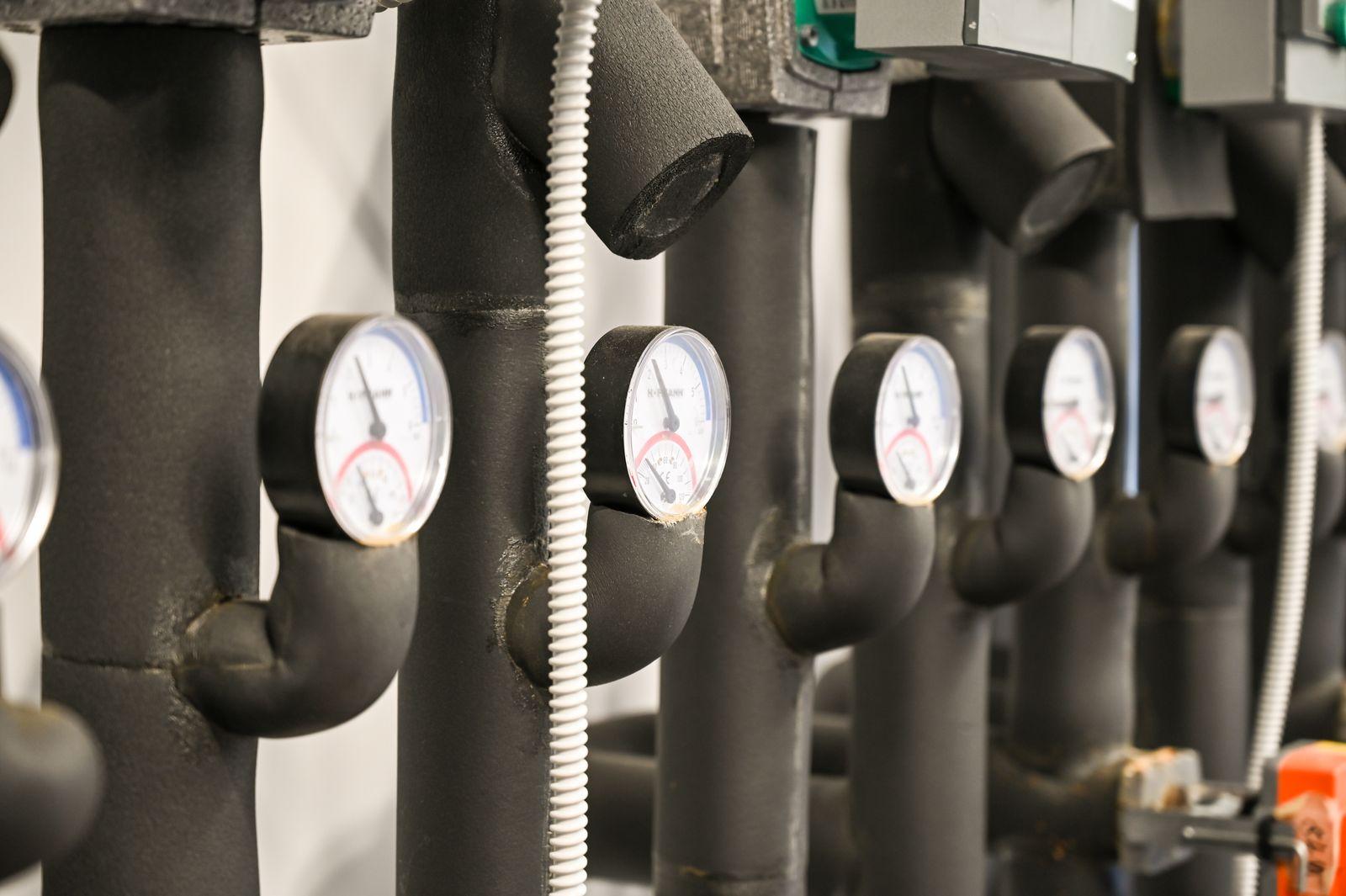
Most owners never see the mechanical room, but it is where a large share of a condominium's operating budget and future reserve fund spending sits. Boilers, chillers, cooling towers, pumps and the controls that tie them together keep suites warm in January and cool in July. When one of them fails, the result is usually urgent: no heat or hot water for hundreds of residents, emergency contractor rates and an unplanned draw on the reserve fund.
This guide is for Ontario condo boards and directors who want to understand what is in their central plant, who is responsible for it, which provincial rules can apply and what a sound maintenance program looks like. It complements our guide to fan coils and in-suite HVAC, which covers the equipment inside units.
Why the mechanical room belongs on the board's agenda
Central plant equipment is expensive, long-lived and easy to forget about while it works. Boards tend to hear about it only when something goes wrong. A few reasons it deserves regular attention:
- It is shared by everyone. A boiler or chiller outage affects every suite it serves, often at the worst time of year.
- Some equipment is regulated. Certain boilers, pressure vessels and refrigeration plants are subject to provincial safety rules, inspections and records.
- It drives the reserve fund. Major mechanical components are typically among the larger items in a reserve fund study, so their condition affects contribution planning.
- Poor maintenance is costly. Neglected water treatment, skipped safety-control tests and deferred repairs shorten equipment life and raise energy use.
What is usually in a condo central plant
Every building is different, so ask your manager or mechanical contractor for an equipment inventory. In many Toronto mid-rise and high-rise condominiums, the mechanical room and roof include some combination of:
- Heating boilers that heat water circulated to fan coils, convectors or make-up air units.
- Domestic hot water equipment, such as dedicated boilers, water heaters, storage tanks and heat exchangers.
- Chillers that produce chilled water for cooling, often paired with a cooling tower on the roof.
- Pumps, expansion tanks, valves and piping that move and control water through the heating and cooling loops.
- Make-up air units that supply fresh, conditioned air to corridors.
- A building automation system or other controls that schedule equipment, manage setpoints and raise alarms.
Some buildings have a two-pipe system that switches between heating and cooling each season, while others run heating and cooling at the same time on a four-pipe system. Newer buildings may use geothermal or heat pump systems. The type of system shapes the maintenance program, so the first step is simply knowing what you have.
Who is responsible under the Condominium Act
Under section 90 of the Condominium Act, 1998, and subject to section 91, the corporation must maintain the common elements and each owner must maintain their own unit. The obligation to maintain includes repair after normal wear and tear. Separately, section 89 makes the corporation responsible for repairing units and common elements after damage, again subject to the declaration and the Act.
Section 91 lets the declaration change those default responsibilities, so your declaration is the starting point. In most buildings, the boilers, chillers, cooling tower and main risers are common elements, and the corporation looks after them. Equipment that serves a single suite, such as a fan coil, may be part of the unit or may be an exclusive-use common element, depending on how the declaration is drafted. If the wording is unclear, ask the corporation's lawyer before assuming.
Ontario rules that can apply to boilers and chillers
Which rules apply depends on the type, size and pressure of your equipment. Your mechanical contractor, insurer or the Technical Standards and Safety Authority (TSSA) can confirm how they apply to your building. The main ones boards should know about are below.
Boilers and pressure vessels
Ontario's Boilers and Pressure Vessels regulation (O. Reg. 220/01), made under the Technical Standards and Safety Act, 2000, says no one may operate or use a boiler, pressure vessel, fitting or piping that the regulation covers unless a current certificate of inspection has been issued for it. It also prohibits operating equipment above its maximum allowable working pressure.
Not every boiler is covered. The regulation excludes, among other things, low-pressure boilers with a power rating of 30 kW or less or a wetted heating surface of 30 square feet or less, and some pressure vessels and piping that operate at low pressures or temperatures. Larger central heating boilers in condominiums are commonly within its scope, but confirm the status of each piece of equipment rather than assuming.
Periodic inspections are carried out at intervals set out in the regulation's code adoption document, either by TSSA or by an inspector acting for the corporation's boiler and machinery insurer. Ask your manager when each certificate of inspection was issued and when the next inspection is due.
Operating engineers and plant registration
The Operating Engineers regulation (O. Reg. 219/01) applies to registered plants, and it says a plant it covers cannot be used or operated unless it is registered. Depending on the type and power rating of the boilers and refrigeration compressors, the regulation can also set requirements for certificated operating engineers or operators and for how the plant is supervised. Many residential plants are set up to run on automatic controls, but the details matter, so ask your contractor whether your plant is registered and what, if anything, the regulation requires for it.
Refrigerants in chillers and air conditioning equipment
Ontario's Ozone Depleting Substances and Other Halocarbons regulation (O. Reg. 463/10), made under the Environmental Protection Act, governs how refrigeration and air conditioning equipment is serviced. Anyone who services or tests equipment containing refrigerant must be certified under the regulation and have access to refrigerant recovery equipment. Leak tests must follow the Environmental Code of Practice the regulation names, the technician must tell the owner the results, and the technician must keep records of refrigerant used, recovered and discharged. Practically, the board should make sure its chiller contractor is qualified and that copies of refrigerant service records are kept with the building's files.
Gas-fired equipment and fire safety
Work on gas-fired boilers and water heaters must be done by appropriately certified gas technicians under TSSA's fuels rules. Mechanical rooms also have fire safety obligations, from fire separations to keeping service rooms free of storage. Our guide to fire safety obligations for Toronto condo boards covers the Fire Code side.
What a good maintenance program looks like
Central plant maintenance is a planned, year-round program, not a call to the contractor when something breaks. A sound program typically includes:
- Seasonal start-up and shutdown. Heating equipment is serviced before the heating season and cooling equipment before summer. For two-pipe buildings, the changeover date is planned and communicated to residents in advance.
- Regular inspections and logs. Routine checks of pressures, temperatures, alarms and leaks, recorded in a log that the manager can review.
- Safety control testing. Testing of low-water cut-offs, relief valves, burner safety controls and other protective devices at the frequency the manufacturer and the service contract specify.
- Combustion tuning. Periodic combustion analysis on gas-fired boilers to keep them safe and efficient.
- Water treatment. Chemical treatment and testing of closed heating and chilled water loops to limit corrosion and scale, and a water management program for the cooling tower. Industry standards such as ASHRAE Standard 188 address managing the risk of Legionella in building water systems, and your water treatment provider should explain how its program applies to your tower.
- Pumps and motors. Checks of bearings, seals, alignment and vibration, with standby pumps rotated so they are ready when needed.
- Controls review. Periodic review of building automation schedules, setpoints and alarm settings, so equipment is not running harder than it needs to.
The program should sit within the building's broader preventive maintenance and asset management plan and connect to your winter readiness checklist.
What to check in the mechanical service contract
Most condominiums rely on an outside mechanical contractor. Before signing or renewing, the board should be clear on:
- Scope: exactly which equipment is covered, and which tasks are included at which frequency.
- Parts and labour: whether the price is labour-only, includes some parts, or is a comprehensive agreement, and how refrigerant, chemicals and filters are billed.
- Response times: guaranteed response for emergencies, after-hours and holiday rates, and who on site can call the contractor.
- Qualifications: that technicians hold the certificates their work requires, such as gas technician or refrigerant certification.
- Reporting: written service reports after each visit, deficiency lists with recommended repairs and prices, and an annual summary of equipment condition.
- Insurance and term: liability insurance, the contract term, renewal and termination provisions.
Comparing bids works best when every contractor prices the same written scope. A contract that looks cheaper because it covers fewer visits or excludes parts is rarely better value.
Records the board should be able to see
Good records protect the corporation, make inspections smoother and help the next board or manager pick up where you left off. Ask your manager to keep, in one place:
- An equipment inventory with make, model, serial number, capacity and installation year.
- Current certificates of inspection and the most recent inspection reports for regulated boilers and pressure vessels.
- Plant registration documents, where they apply.
- Refrigerant service and leak test records for chillers and other refrigeration equipment.
- Water treatment test results and cooling tower program records.
- Contractor service reports, deficiency lists and repair history.
- Warranties, manuals and as-built drawings.
A short mechanical summary in the manager's monthly report, covering open deficiencies, upcoming inspections and any outages, keeps the board informed without technical overload.
Planning for replacement, not just repair
Every boiler, chiller and pump will eventually reach the end of its service life. Section 94 of the Condominium Act requires corporations to have reserve fund studies done periodically, and major mechanical components are part of that analysis. Boards should:
- Compare the reserve fund study's assumptions with the contractor's assessment of actual condition.
- Ask an engineer for a condition assessment when equipment shows repeated failures, rising repair costs or declining efficiency.
- Plan replacements early enough to compare options, including higher-efficiency equipment, rather than replacing like-for-like in an emergency.
- Consider redundancy, such as multiple smaller boilers instead of one large one, so a single failure does not leave the building without heat.
Our guide to reserve fund planning in Toronto explains how replacement timing feeds into contribution planning.
Warning signs boards should not ignore
- Repeated no-heat or no-hot-water complaints, especially from the same floors or stacks.
- Frequent emergency calls or rising repair invoices for the same equipment.
- Service reports that list the same deficiencies visit after visit with no repair date.
- An expired or missing certificate of inspection, or nobody knowing when the next inspection is due.
- Visible leaks, corrosion or water on the mechanical room floor.
- Equipment running constantly or at odd hours, which may point to a controls problem.
A quick checklist for your next board meeting
- Do we have a current equipment inventory with ages and capacities?
- Are certificates of inspection current for every boiler and pressure vessel that needs one?
- Do we know whether our plant is registered with TSSA and what that requires?
- Does our mechanical contract clearly define scope, frequency, response times and reporting?
- Are refrigerant and water treatment records kept and reviewed?
- Does the reserve fund study reflect the real condition of our central plant?
- Is there a contingency plan for a heating or hot water outage in winter?
How Brilliant Property Management can help
Our managers coordinate mechanical contractors, track inspections and certificates, review service reports with the board and plan replacements alongside the reserve fund study. Learn more about our condo property management in Toronto and the full range of our management services. If your board is reviewing its management arrangements, you can request a proposal from our team.
Frequently asked questions
Does every condo boiler need a TSSA certificate of inspection?
No. O. Reg. 220/01 requires a current certificate of inspection for the boilers and pressure vessels it covers, but it excludes some equipment, such as low-pressure boilers rated at 30 kW or less. Larger central heating boilers are commonly covered, so confirm the status of each unit with your contractor, insurer or TSSA.
Who pays to repair a broken condo boiler?
Central boilers are usually common elements, so the corporation is responsible for maintaining and repairing them and pays from the operating budget or, for major replacements, the reserve fund. The declaration can change default responsibilities, so check yours.
How often should a condo chiller or boiler be serviced?
There is no single schedule for every building. Service frequency should follow the manufacturer's recommendations, the service contract, any regulatory inspection intervals and the equipment's age and condition. Most buildings service heating and cooling equipment at least before each season, with routine checks in between.
What records should a condo keep for its chiller?
Keep the equipment details, service reports, refrigerant service and leak test records, and any repair history. Under O. Reg. 463/10, the technician must tell the owner the results of a leak test, so make sure those results reach the corporation's files.
This article is general information for Ontario condominium boards and is not legal or engineering advice. Statutes, regulations and their application change, so confirm current requirements with your condominium lawyer, a qualified engineer or contractor, TSSA and the official text on e-Laws before acting.