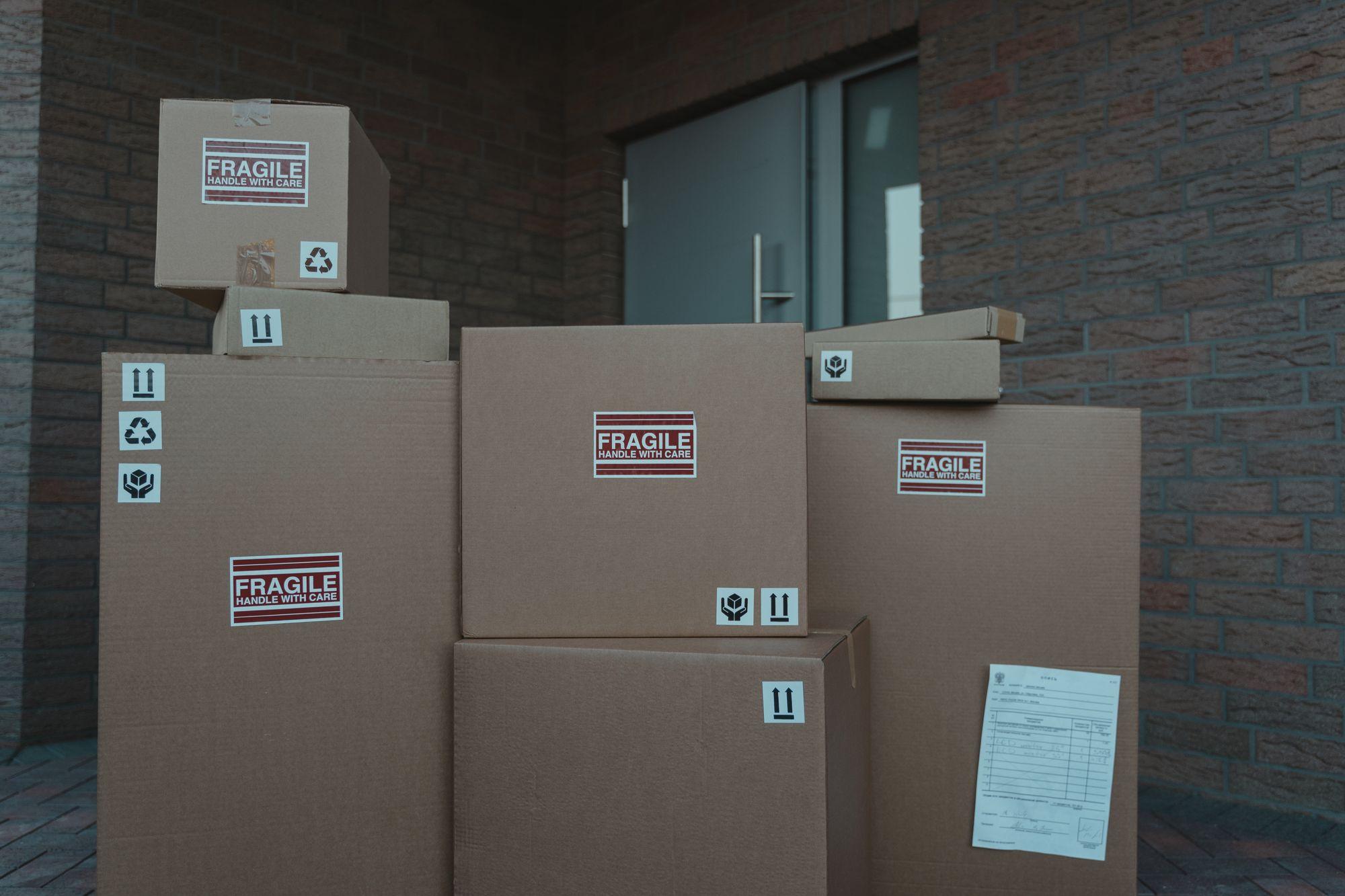
Ask a Toronto concierge what has changed most about their job over the past decade and many will point to the same thing: boxes. Online shopping, meal kits, pharmacy deliveries and courier returns have turned the front desk into a small warehouse, and the pressure peaks every year between late November and early January. When the parcel room overflows, boards hear about it quickly, through lost-package complaints, crowded lobbies, blocked corridors and requests for camera footage.
This guide is for Ontario condo boards and directors, with a focus on Toronto buildings. It explains what the Condominium Act, 1998 lets a board do about deliveries, how to write a parcel policy that owners will accept, how to think about responsibility when a package goes missing, and what to consider before installing smart parcel lockers.
Why Package Deliveries Have Become a Board Issue
Most condominium buildings were designed before daily deliveries were normal. A typical lobby has a mailbox wall for Canada Post and a concierge desk with a small back room, if that. When delivery volume grows faster than the space, the same problems show up in building after building:
- Parcels stacked behind the desk, on the lobby floor or in a hallway because the storage room is full.
- Concierge staff spending much of their shift logging and handing out packages instead of watching the door and the monitors.
- Couriers leaving parcels in the vestibule, at the mailboxes or outside unit doors without anyone signing for them.
- Packages that sit unclaimed for weeks, including perishable food and returned items.
- Disputes about who is responsible when a parcel is lost, damaged or handed to the wrong person.
None of these is dramatic on its own, but together they affect security, fire safety, staff workload and owner satisfaction. That makes package handling a governance question, not just a front-desk routine.
What the Condominium Act Lets a Board Do
The Condominium Act, 1998 gives the corporation a duty to control, manage and administer the common elements and its assets (section 17(2)). The lobby, the concierge desk and the parcel room are common elements, so the board has both the authority and the responsibility to decide how they are used.
Rules under section 58
Section 58 allows the board to make, amend or repeal rules about the use of the units, the common elements and the corporation's assets, to promote the safety, security or welfare of the owners and the property, or to prevent unreasonable interference with the use and enjoyment of the units and common elements. Rules must be reasonable and consistent with the Act, the declaration and the by-laws.
The process matters. After making a rule, the board must give owners notice that includes a copy of the rule, the proposed effective date, a statement of the owners' right to requisition a meeting under section 46, and the text of sections 46 and 58. If owners do not requisition a meeting within 30 days of the notice, the rule becomes effective the day after that 30th day. If they do requisition a meeting, the rule takes effect only once the meeting fails to reach quorum on its first attempt, or reaches quorum and the owners do not vote against it.
A parcel policy that sets hours, pickup deadlines and storage limits is a good fit for a rule. Before relying on one, check your declaration and existing by-laws: some older corporations already have delivery or concierge provisions, and anything new must be consistent with them. Our guide to declarations, by-laws and rules explains how the three documents fit together.
Enforcing the policy
Section 17(3) requires the corporation to take all reasonable steps to ensure that owners, occupiers, and the corporation's agents and employees comply with the Act, the declaration, the by-laws and the rules. In practice, that means the parcel policy has to be applied consistently, communicated to tenants as well as owners, and followed by the concierge or security contractor, not just posted in the mail room.
Who Is Responsible When a Package Goes Missing?
This is the question boards are asked most often, and there is no single answer. Responsibility depends on the facts: whether staff signed for the parcel, what the corporation's rules and notices say, what the concierge or security contract says about handling deliveries, and how carefully the parcel was stored and released. Once building staff accept a package on a resident's behalf, the corporation may be expected to take reasonable care of it, which is why many boards are careful about when staff accept parcels at all.
Some practical points help reduce both losses and disputes:
- Be clear about acceptance. State in the rule which deliveries staff will accept (for example, standard parcels during desk hours), which they will not (for example, large furniture, cash-on-delivery items, items needing a signature from the addressee or controlled substances), and that items left by couriers without staff signing for them are not in the corporation's care.
- Log every parcel. A simple log, paper or electronic, recording the carrier, unit, time received, storage location, and the name of the person who picked it up and when, is the single most useful tool in a dispute.
- Release only to authorised people. Set out who can collect a parcel (the addressee, another resident of the unit, or someone the resident authorises in writing) and require identification or a pickup code.
- Read the contract. Your concierge or security agreement should say who handles deliveries, what the log must record, and how the contractor's staff are trained. Contract terms on concierge and security services deserve their own review, and a lawyer should look at any language about liability or indemnities.
A rule or notice that says the corporation is not responsible for lost parcels may help set expectations, but it will not necessarily protect the corporation if staff were careless. If a board wants to limit its exposure, it should get legal advice on the wording and talk to its insurer about how a claim would be handled.
Writing a Parcel Room Policy
A good policy is short, specific and easy for staff to apply. Most effective parcel rules cover the following areas.
Hours and acceptance
Set the hours during which staff will receive and release parcels, and say what happens to deliveries outside those hours. If the desk is not staffed around the clock, owners need to know whether couriers can leave packages anywhere and who is responsible for them.
Storage limits and pickup deadlines
Space is the core problem, so the policy should say how long a parcel can stay in the parcel room before it is returned to the carrier, moved to overflow storage or handled under an unclaimed-parcel procedure. Many corporations choose a pickup window of several days, with a reminder before the deadline. Pick a period that suits your building's space and staffing, and apply it the same way to everyone.
Size and type restrictions
Large or heavy items, such as furniture, appliances and mattresses, usually belong with the move-in and delivery booking process rather than the front desk. If your building requires elevator bookings for large deliveries, cross-reference the move-in and move-out rules so residents are not caught between two policies.
Perishables and medication
Food boxes, grocery orders and pharmacy deliveries create special problems. The policy should say whether staff will accept them, whether there is any refrigerated storage (most buildings have none), and that the corporation is not able to keep perishables cold. Many boards ask residents to schedule these deliveries for times they are home.
Unclaimed parcels
Decide in advance what staff do with a package nobody claims: how many notices go to the unit, when the parcel is returned to the carrier, and how the action is recorded. A written procedure avoids staff having to make judgement calls about someone else's property.
Fees
Some corporations consider charging for extended storage or for parcel lockers. Any fee should have a clear basis in your governing documents and be reasonable. Get advice before introducing one, because a fee that is not properly authorised can lead to a dispute.
Keeping Lobbies and Corridors Clear
Overflow parcels are not only an inconvenience. The Ontario Fire Code requires means of egress to be maintained in good repair and free of obstructions (Division B, Sentence 2.7.1.7.(1)). Boxes stacked in an exit lobby, a corridor or in front of a stairwell door can become a fire safety problem as well as a trip hazard.
The policy should say where overflow goes when the parcel room is full, and staff should know they cannot simply line the lobby with boxes. Residents should also be told not to leave empty boxes or parcels outside unit doors. For broader fire safety duties, see our guide to fire safety for Toronto condo boards. The holiday season also brings a surge of cardboard, so it helps to remind residents to break down boxes and use the recycling room properly.
Smart Parcel Lockers: What to Consider
Many Toronto buildings are looking at electronic parcel lockers, either corporation-owned or provided by a third party, as a way to relieve the concierge desk. Lockers can reduce staff time, give residents 24-hour access and create an automatic delivery record. They also raise questions a board should answer before signing anything.
Approval under section 97
Installing lockers is usually an addition or alteration to the common elements, or a change in a service the corporation provides, so section 97 of the Act applies. Section 97 sets out three paths:
- A board can proceed by resolution without notice to owners in limited cases, including where the estimated cost in any month (or other prescribed period) is no more than the greater of $1,000 and 1 per cent of the annual budgeted common expenses for the current fiscal year, subject to the regulations.
- Above that, the corporation generally must send owners a notice describing the change, its estimated cost and how it will be paid for, along with their right to requisition a meeting within 30 days.
- A substantial change needs the approval of owners of at least 66 2/3 per cent of the units at a meeting called for that purpose. A change is substantial if its estimated total cost exceeds the lesser of 10 per cent of the annual budgeted common expenses and any prescribed amount, or if the board elects to treat it as substantial.
The total cost includes installation, electrical work, network connections and any long-term service fees, so check the full contract value before deciding which path applies. Your condominium lawyer can confirm the correct process for your corporation.
Contract and data questions
Before signing with a locker provider, ask:
- Who owns the lockers, and what happens at the end of the contract?
- What are the monthly fees, and are there per-use charges for residents?
- Which carriers can use the lockers? Some systems do not accept every courier.
- What happens to oversized parcels, and how is overflow handled?
- What resident information does the provider collect, where is it stored and who can see it?
- Who maintains the units and responds when a locker fails?
Lockers do not remove the need for a policy. You will still need rules about pickup deadlines, oversized items and what staff do when the lockers are full.
Missing Packages, Footage and Records
When a parcel disappears, the first request is often for security camera footage. Requests for footage involve privacy considerations, and the corporation should handle them under a consistent written procedure rather than case by case. Our guide to security cameras and privacy in Ontario condos covers how boards can approach footage requests and retention.
Parcel logs and incident reports may also be records of the corporation. If an owner asks to see them, the request should be handled through the corporation's normal records process under section 55 of the Act. See our article on condo records requests for how that process works. Keep logs accurate and factual, and keep them for a period the board has decided on with advice, rather than deleting them informally.
If theft is suspected, residents can report it to police, and the corporation can cooperate with an investigation. Repeated thefts may point to a gap in access control, such as tailgating at the front door or unsecured vestibules, which is worth raising with your security provider.
Preparing for the Holiday Peak
A few weeks of planning before the holiday season can prevent most of the complaints boards hear in December:
- Send residents a reminder of the parcel policy, pickup deadlines and desk hours in mid-November.
- Identify an overflow area that does not block exits or corridors, and decide who can authorise its use.
- Ask your concierge or security contractor whether extra coverage is needed during the busiest weeks, and what it would cost.
- Make sure the recycling room can handle the extra cardboard, and remind residents to break boxes down.
- Review the parcel log in January and look at whether the policy, the space or the staffing needs to change before next year.
How Brilliant Property Management Can Help
Package handling touches policy, staffing, contracts, security and owner communication, which is exactly the kind of day-to-day operation a management team should keep running smoothly. Our team helps boards draft practical rules, set up logging and pickup procedures, coordinate with concierge and security contractors, and review options such as parcel lockers. Learn more about our condo property management in Toronto, browse our full list of management services, or request a proposal for your building.
Frequently Asked Questions
Can a condo board limit how long packages stay in the parcel room?
Yes, in most cases. Under section 58 of the Condominium Act, a board can make reasonable rules about the use of the common elements, including parcel storage time limits, as long as the rule is consistent with the Act, the declaration and the by-laws and the board follows the notice process.
Is the condo corporation responsible for a lost package?
It depends on the facts, including whether staff accepted and signed for the parcel, what the rules and the concierge contract say, and how the parcel was stored and released. A careful log and clear acceptance rules reduce disputes. Get legal advice on liability wording.
Do parcel lockers need owner approval?
Possibly. Installing lockers is usually a change to the common elements or services under section 97 of the Act. Depending on the cost, the board may act by resolution, must give owners notice, or needs the approval of owners of at least 66 2/3 per cent of the units.
Can couriers leave packages in the lobby or hallway?
Boards should discourage it. The Ontario Fire Code requires means of egress to be kept free of obstructions, and packages left unattended are a security risk. A parcel rule should say where deliveries can be left and what happens to items left elsewhere.
This article is general information about Ontario condominium practice and is not legal advice. Consult a qualified condominium lawyer and your insurer about your corporation's specific circumstances.