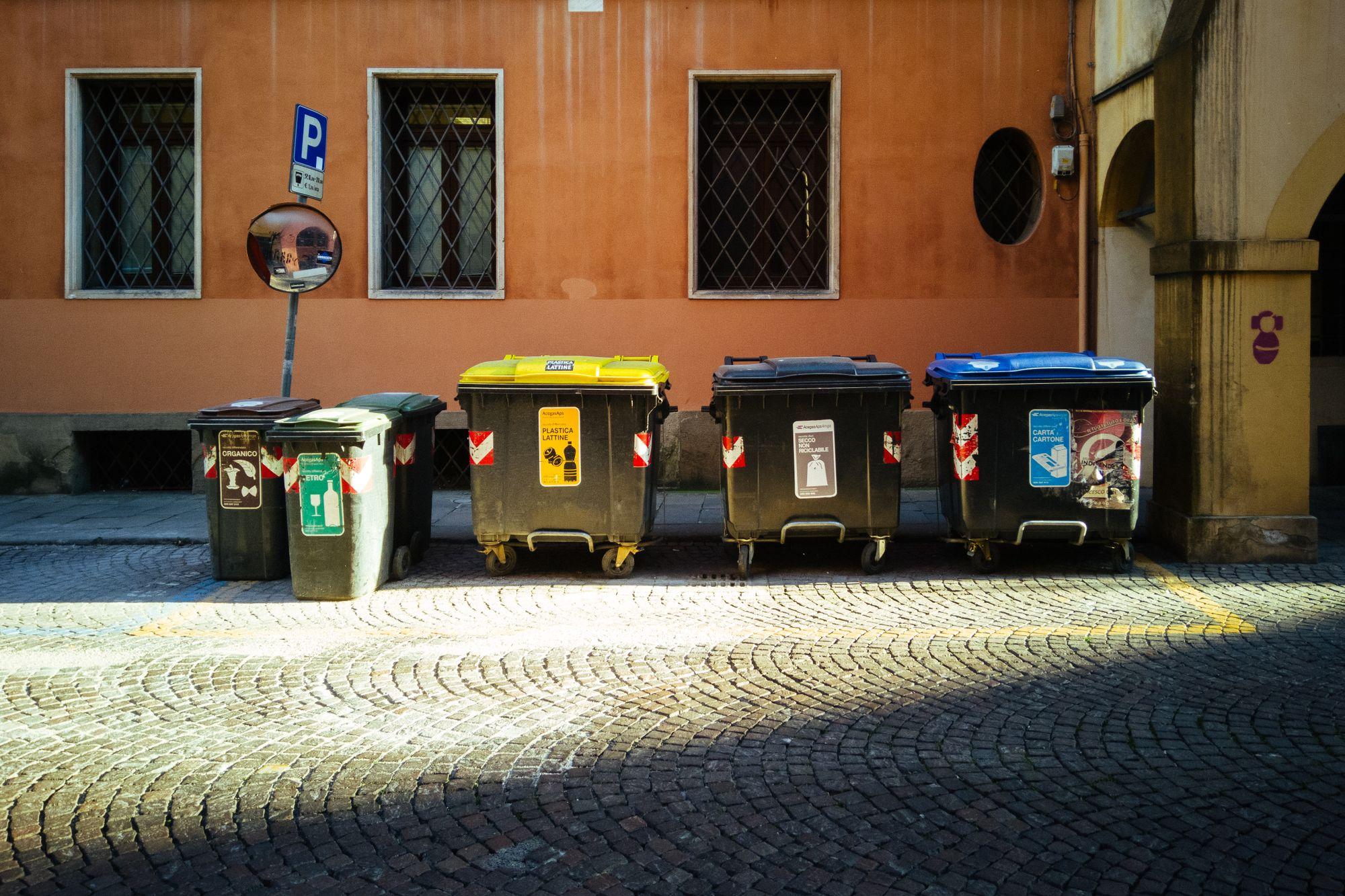
Garbage rarely makes the agenda until something goes wrong: a jammed chute on a Friday night, a contaminated recycling bin left behind by the hauler, a bill for excess garbage that nobody saw coming, or an owner complaint about the smell in the P1 garbage room. In a Toronto condominium, waste is a daily operation that touches the budget, the building's fire safety, owner relations and, since January 1, 2026, a new recycling system run by producers rather than the City.
This guide is for Ontario condo boards and directors, with a focus on Toronto buildings. It explains who collects what, what the corporation is required to provide, how City fees work, and how rules and communication can keep the program running without constant complaints.
Who Collects Your Building's Waste Now
Most Toronto condo corporations deal with up to three collection arrangements at once, and it helps to know exactly which ones apply to your building.
Garbage and organics: City collection or a private hauler
The City of Toronto offers a waste collection program for apartments, condos and co-ops. It covers garbage and also includes collection of Green Bin organics, electronics, yard waste and household hazardous waste at no additional cost. Eligibility depends on the building:
- Curbside collection is generally for buildings with between nine and 30 residential units (some buildings with 31 to 60 units may qualify), and the building must pass a site inspection.
- Front-end collection is for buildings with 31 or more units. The building must pass a site inspection and a vehicle test run. The City's page notes that collection vehicles need a dedicated Type G loading space, a minimum of 4.4 metres of vertical clearance to travel through private property and 6.1 metres at collection points, and must enter and exit moving forward.
Some corporations use a private hauler instead, usually because the site cannot meet the City's access requirements or the board has chosen a private contract. The City describes its program as all-or-nothing: if a property opts out of City garbage collection, it is not eligible for City collection of the other streams either, including Green Bin organics, household hazardous waste, electronic waste and oversized items. The City recommends that owners estimate the cost of managing those other streams privately before comparing quotations.
Recycling: the Blue Box moved to producers on January 1, 2026
Under Ontario's Blue Box regulation (O. Reg. 391/21 under the Resource Recovery and Circular Economy Act, 2016), producers of packaging and paper are now responsible for residential recycling. In Toronto, the City stopped collecting residential recycling on January 1, 2026, and Circular Materials, the administrator of the province's common collection system, took over through its collection contractor. According to the City and Circular Materials:
- Multi-residential buildings that received City recycling collection before the transition continue to receive recycling service through Circular Materials, at the same collection frequency as before.
- Recycling questions, missed recycling pickups and Blue Bin requests now go to Circular Materials (1-888-921-2686), not 311.
- Buildings that apply for City garbage collection on or after January 1, 2026 must show proof that a private company has been retained to collect their recycling.
The regulation defines a "facility" to include a building with six or more dwelling units, including a condominium. A 2025 amendment delayed producer collection for facilities that were not served by the municipal Blue Box program before the transition. Under section 4(6) of O. Reg. 391/21, such a building becomes an eligible source on the later of January 1, 2031 and the date it registers under section 63. Until then, a condo that never had City recycling service needs to keep, or arrange, private recycling collection. Boards that are unsure which category their building falls into should confirm it with their manager and their current haulers rather than assume.
What the Corporation Is Required to Provide
Recycling in a condo building is not optional. Ontario Regulation 103/94 under the Environmental Protection Act requires the owner of a building that contains six or more dwelling units to implement a source separation program for the waste generated at the building, and section 10 of the regulation states that "owner" includes a condominium corporation. The requirement applies to buildings in a local municipality with a population of at least 5,000, which includes Toronto and the surrounding GTA municipalities.
Section 2 of the regulation sets out what a program must include:
- facilities for collecting, handling and storing source-separated waste that are adequate for the anticipated quantities;
- measures to make sure the separated waste that is collected is removed;
- information for users that describes how the program is performing and encourages effective source separation and full use of the program; and
- reasonable efforts to make sure the program is fully used and that the separated waste is reused or recycled.
For multi-unit residential buildings, the schedule to the regulation lists aluminum and steel food or beverage cans, glass food and beverage bottles and jars, newsprint, PET plastic food and beverage bottles, and the categories collected or accepted by the municipality's blue box system. The City reminds buildings that switch to private collection that they must still provide recycling in accordance with O. Reg. 103/94, and says the Ministry of the Environment, Conservation and Parks is actively enforcing it.
In practice, that means a board should be able to point to recycling containers that are big enough for the building, a hauler that actually empties them, and signage or notices that tell residents how to use the system. If recycling regularly overflows into the garbage, or the building has no current information for residents, the program has a gap worth fixing.
How City Fees Work, and Why Diversion Saves Money
For buildings on City collection, the solid waste fee is tied to the volume of garbage the building produces. The City's 2026 fees for curbside bin and front-end collection, approved in the 2026 budget, are:
- a base rate of $260.98 per unit per year, less a rebate of $185.00 per unit per year, for a net rate of $75.98 per unit per year;
- an excess charge for garbage above the base volume of $18.11 per cubic yard for un-compacted garbage or $36.23 per cubic yard for compacted garbage;
- an annual oversized and metal item fee of $23.23 per unit, charged whether or not the service is used; and
- garbage tags at $6.81 each for excess bagged garbage set out beside a curbside bin.
Green Bin organics and household hazardous waste collection carry no separate fee. The City notes that buildings that divert more waste through the Green Bin program reduce their solid waste fees. For a board, that makes organics participation and recycling quality financial issues, not just environmental ones. Fees are set annually, so check the City's current figures when you prepare the operating budget.
A practical step is to ask your property manager to track the building's waste invoices over twelve months, note any excess charges, and compare them with changes in occupancy, move-ins or renovation activity. A spike in excess charges is often the first sign that organics or recycling participation has dropped, or that contractors are leaving construction debris in the garbage room.
Chutes, Garbage Rooms and Building Operations
Most Toronto high-rise condos use a chute system, sometimes with a tri-sorter or a separate chute for recycling, feeding a compactor or containers in a central garbage room. These systems need routine attention:
- Cleaning and odour control. Chutes and garbage rooms need scheduled cleaning, and many buildings add a chute-cleaning contract and pest control service. Persistent odour or pests usually point to a cleaning gap or residents bagging waste poorly. Our article on pests and bed bugs in Ontario condos covers how boards coordinate pest treatment.
- Compactors and sorters. Equipment should be on a preventive maintenance contract, with clear instructions for staff on jams and lock-out procedures. Breakdowns lead to overflowing rooms and extra pickups.
- Fire safety. Garbage rooms and chute rooms contain combustible material. Chute doors and chute-room doors in many buildings form part of the fire separations described in the fire safety plan, and the plan may require that they close properly and are never propped open. Boards should confirm these details with their fire safety plan and inspection contractor. Our guide to fire safety duties for Toronto condo boards explains the broader inspection and record-keeping duties.
- Set-out and access. The City asks front-end buildings to place containers at the designated collection point before 7 a.m., lock the wheels, open and secure service gates, and keep the collection driveway and loading space clear of snow, ice and parked cars. Missed City collection can be reported through a service request or 311 within one business day of the scheduled collection day.
Staff schedules, contractor scopes and capital planning for compactors and chute systems all sit with the corporation. A good manager will keep the service contracts, inspection reports and invoices together so the board can see the full cost of the waste system in one place.
Writing Rules That Owners Will Follow
Most waste problems in condos are behaviour problems: oversized cardboard jammed in the chute, recycling in plastic bags, renovation debris left in the garbage room, furniture abandoned in the loading dock, or chute use late at night. The board's main tool is the corporation's rules under section 58 of the Condominium Act, 1998.
Rules can address the use of the common elements and units to promote the safety, security or welfare of owners and the property, or to prevent unreasonable interference with the use and enjoyment of the units and common elements. They must be reasonable and consistent with the Act, the declaration and the by-laws. New rules take effect only after owners receive notice and have the opportunity to requisition a meeting, so plan the timeline. If you are unsure whether a waste issue belongs in the rules or the declaration, our explainer on condo declarations, by-laws and rules walks through the differences.
Waste rules that tend to work well include:
- what goes down the chute (bagged garbage only, no loose glass, no cardboard boxes) and what goes to the garbage room;
- chute hours, where noise is an issue for suites next to the chute room;
- how to handle bulky items, furniture and appliances, including booking the service elevator and using the City's oversized item service where the building has it;
- a requirement that contractors working in suites remove their own construction and renovation debris;
- how to dispose of household hazardous waste, batteries and electronics; and
- a reminder that the owner is responsible for tenants, guests and contractors following the rules.
Move-ins and move-outs are a common source of cardboard overload and abandoned furniture. Our article on move-in and move-out rules in Toronto condos covers elevator bookings and deposits, and a short waste section in the move-in package helps a great deal.
When rules are broken, start with education: a friendly notice, signage and a note in the building newsletter. Escalate consistently when the same unit keeps causing problems. Section 119 of the Act requires owners and occupants to comply with the Act, the declaration, the by-laws and the rules. Some disputes, including certain nuisance complaints such as odour, may fall within the Condo Authority Tribunal's jurisdiction, so check the current rules before deciding how to proceed. Whether the corporation can charge enforcement or clean-up costs back to an owner depends on the declaration, the by-laws and the circumstances, so get advice before relying on a chargeback.
Keep accessibility in mind. A resident with a disability may not be able to use a chute or carry waste to a garbage room, and the corporation has a duty under the Ontario Human Rights Code to accommodate to the point of undue hardship. A reasonable arrangement, such as staff pickup at the door on set days, is usually simpler than a dispute.
Making Recycling and Organics Programs Work
Good participation lowers garbage fees, cuts contamination and reduces complaints. The City offers several supports for buildings on City collection:
- In-unit organics containers. Buildings with nine or more units that receive City garbage collection can request free in-unit Green Bin containers. The request must come from the building owner or property manager. First-time orders can include one container per unit plus 10 per cent for replacements, and buildings can request a further 10 per cent each year. The City's in-unit Blue Bin bag program was discontinued on January 1, 2026.
- Education materials. Buildings on City collection can contact 311 for guides, posters, stickers, lobby displays, presentations and site visits.
- 3Rs Ambassadors. Residents aged 16 and over in buildings with nine or more units on City collection can volunteer as 3Rs Ambassadors after training. The program requires the support of the building manager or superintendent, so a board that wants a volunteer-led program should confirm that management is on board.
For recycling questions about what is accepted since the transition, direct residents to Circular Materials rather than older City guidance. Update posters in chute rooms, elevators and the move-in package so residents are not working from outdated instructions.
A simple annual waste review helps the board stay on top of the program. Ask the manager for the year's invoices and excess charges, a list of service problems (missed pickups, contamination notices, equipment breakdowns), the status of each hauler contract, and a short plan for the next year. If the board is considering a move between City and private collection, compare the full cost of every stream, not just garbage.
Where Professional Management Helps
Waste management touches contracts, staff, equipment, rules and owner communication at once, which is why boards usually rely on their property manager to run it day to day. An experienced manager will know which collection arrangements apply to the building, keep service contracts and records organised, track fees against the budget, and handle resident education and rule enforcement consistently. If your building is struggling with overflowing rooms, rising excess charges or recurring complaints, it may be time to review how the program is managed.
Brilliant Property Management provides condo property management in Toronto and across the GTA, including building operations, vendor contracts and owner communication. You can review our full property management services, or request a proposal for your corporation.
Frequently Asked Questions
Who collects recycling from Toronto condos since January 1, 2026?
Multi-residential buildings that received City recycling collection before January 1, 2026 continue to receive service through Circular Materials, which administers Ontario's producer-run Blue Box system, at the same frequency as before. Recycling inquiries go to Circular Materials at 1-888-921-2686. Garbage, organics and other streams remain with the City for buildings on City collection.
Does a condo corporation have to provide recycling?
Yes. O. Reg. 103/94 requires the owner of a building with six or more dwelling units, which expressly includes a condominium corporation, to implement a source separation program, in municipalities with a population of at least 5,000. The program must include adequate collection facilities, removal of the material, information for residents and reasonable efforts to make sure it is used.
Our building never had City recycling. When can we join the producer program?
Under section 4(6) of O. Reg. 391/21, a facility that was not served before the transition becomes eligible on the later of January 1, 2031 and the date it registers under section 63. Until then, it needs private recycling collection.
Can the board make rules about chute use and bulky items?
Yes. Under section 58 of the Condominium Act, 1998, the board can make reasonable rules about the use of the common elements and units to promote safety, security or welfare or prevent unreasonable interference. Owners must receive notice before a rule takes effect.
This article is general information about Ontario condominium operations and is not legal advice. Fees, collection programs and regulations change, so confirm current details with the City of Toronto, Circular Materials and your corporation's lawyer before acting.